
On 21 October 1805, the British fleet defeated the combined French and Spanish fleets at the Battle of Trafalgar, while Admiral Horatio Nelson was mortally wounded. With Trafalgar Day approaching, Royal Museums Greenwich’s account offers a way to revisit both the battle’s place in British naval history and the human cost behind its enduring reputation. The anniversary remembers a victory, but it also raises questions about how that history is told.
How the Battle of Trafalgar unfolded
Trafalgar was fought off Spain’s south-west coast during the Napoleonic Wars. The British fleet faced a larger combined fleet of French and Spanish ships. Royal Museums Greenwich identifies the date, the British victory and Nelson’s death as central facts of the battle.
The result secured a major British naval victory and became a pivotal episode in the country’s naval history. But the battle should not be treated as a single event that ended the wider wars or removed their consequences. It took lives, and victory came at a lasting human cost. Holding those facts together helps explain why Trafalgar remains significant without reducing it to an uncomplicated celebration.
A timeline of the anniversary
- 21 October 1805: British ships engage the combined French and Spanish fleet at Trafalgar. Nelson is mortally wounded during the battle.
- After the battle: News of the victory and Nelson’s death makes Trafalgar a defining episode in British naval memory.
- 21 October each year: Trafalgar Day marks the anniversary, keeping the date visible in public and naval remembrance.
- Today: Museum interpretation and historic objects offer ways to examine the event as both a military victory and a human tragedy.
Nelson, the fleets and the cost of victory
Nelson’s death became inseparable from the story of Trafalgar. Remembering the admiral helps explain why the battle acquired such a prominent place in British memory, but focusing only on one celebrated figure can narrow the view. French and Spanish sailors who fought and died belong to the same history.
The familiar framing of Trafalgar as a British triumph can be held alongside the losses across the fleets. This does not diminish the British fleet’s achievement; it places it in the human and historical setting of a major engagement during a wider conflict. Nelson’s death and the deaths among the opposing forces give the anniversary a solemn dimension as well as a commemorative one.
What museum records add to the story
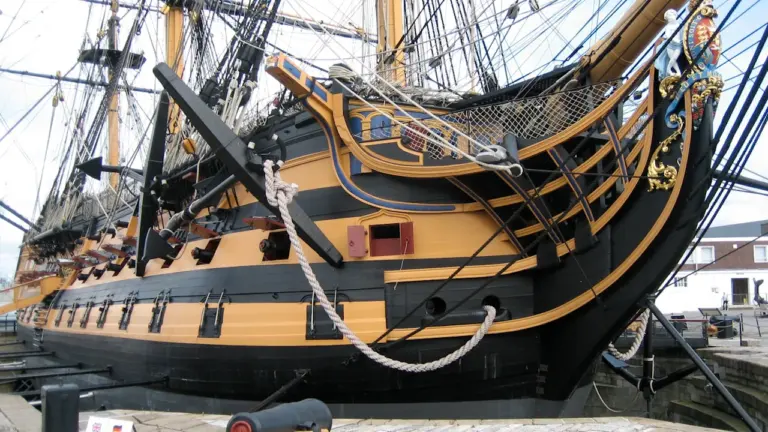
Royal Museums Greenwich provides both a historical account of the battle and a collection record for an object connected with Trafalgar. These serve different purposes: the account sets out what happened, while the collection record offers a material trace through which the event can be interpreted.

An object associated with Trafalgar is not the battle itself. Its record and interpretation can, however, connect readers with surviving material history and show how museums help people encounter the past. This distinction matters: a collection object can support an understanding of the event, while its meaning depends on the historical context in which it is presented.
Why Trafalgar Day is remembered differently over time
Trafalgar Day keeps the battle’s date present in the Royal Navy’s history and Britain’s wider cultural memory. Commemoration can honour service and remember a pivotal naval event while also prompting reflection on what a public celebration emphasizes and what it leaves out.
National remembrance is not fixed. A story told chiefly through victory and Nelson’s reputation can also make room for the deaths on every side and the wider conflict in which the battle took place. That broader view neither erases the British fleet’s achievement nor treats the battle as consequence-free. It makes the anniversary a chance to consider how the meaning of a historic victory changes as interpretation includes more of those who experienced it.
The next milestone is 21 October
The next verifiable milestone is the anniversary on 21 October. The date marks the battle fought in 1805 and provides an occasion to remember the Royal Navy’s victory and Nelson’s death alongside the losses across the fleets. Royal Museums Greenwich’s account and collection record offer two points of reference for approaching that history.
Source: Royal Museums Greenwich
Context & actions About this article
Source check Museum sources
Royal Museums Greenwich provides the battle account and a collection record for objects connected with Trafalgar.
- Battle date: 21 October 1805
- British victory over the combined French and Spanish fleets
- Nelson’s death during the battle
- Source
- Royal Museums Greenwich
- Scope
- United Kingdom
- Updated
- 2026-10-15 08:01
Source check
Report a trust issue
Send a clear signal to community moderation if the source, facts or context need review.


Comments