
On 14 October 1066, William, Duke of Normandy, defeated Harold II at the Battle of Hastings. The victory broke the main English army’s resistance in the south and opened the way for William to claim the crown, but it did not make him king that day: he was crowned in London in December. The battle’s longer impact came through the conquest that followed, which reshaped landholding and royal government across England.
The battle followed a disputed succession
The crisis began with the death of Edward the Confessor in January 1066. Harold Godwinson was chosen and crowned king, but William claimed that Edward had promised him the throne and that Harold had sworn to support his claim. These claims formed part of William’s case; they did not settle the succession dispute for everyone in England.
Harold also faced a challenge from Harald Hardrada, king of Norway, and Harold’s own brother Tostig. In September, Harold marched north and defeated their forces at Stamford Bridge. William’s Norman army landed in southern England soon afterward, forcing Harold to turn south again. The Hastings campaign was therefore one phase in a year of competing claims and rapid military movement, not an isolated invasion with a settled outcome.
14 October: Harold’s army met William near Hastings
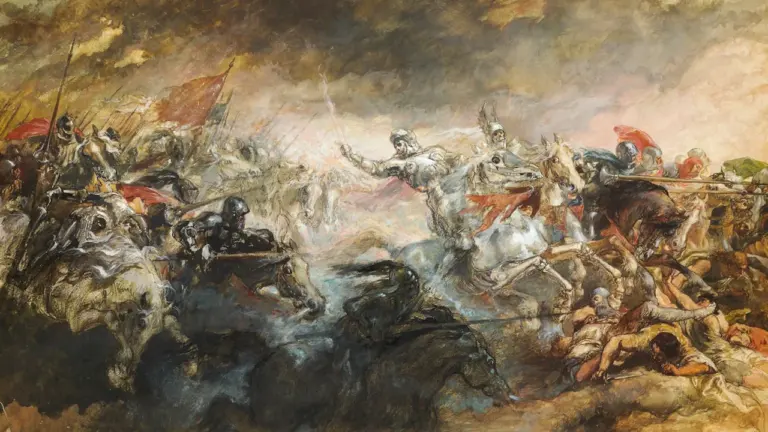
The armies fought near Hastings on 14 October. Harold’s forces included a strong infantry contingent, while William’s army used infantry, archers and cavalry. The battle was prolonged, and its outcome depended on the fighting and the eventual collapse of English resistance. The surviving evidence does not support treating every later account of tactics or dramatic moments as an eyewitness record.
Harold was killed during the battle, according to the historical accounts, and his army was defeated. William’s victory removed the leading military obstacle to his bid for the crown. It did not amount to instant control of the whole kingdom: William still had to secure submission, face resistance and establish his authority beyond the battlefield.
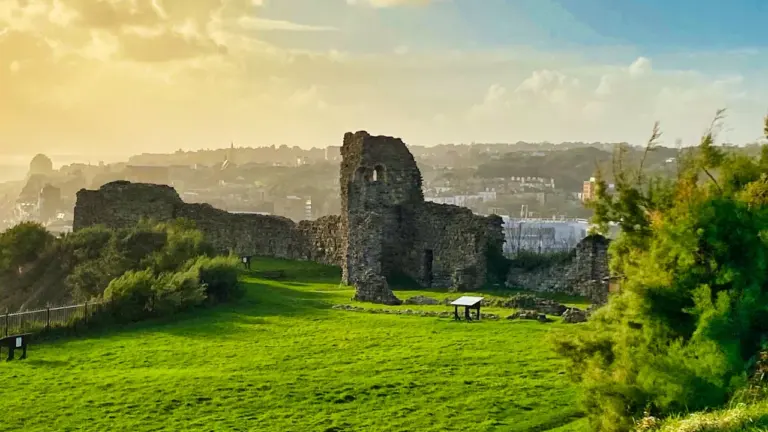
Historic England places Hastings within the wider Norman Conquest and its lasting significance. The battle is remembered at Battle Abbey, founded by William after his victory. The abbey is an important later marker of the event, but traditions associated with the site should be distinguished from details that can be securely established about the day’s fighting.
December brought the coronation, not the battle
After Hastings, William advanced toward London while meeting resistance and seeking recognition from English leaders. He was crowned king at Westminster Abbey on Christmas Day, 25 December 1066. That date marks his coronation; 14 October marks his victory over Harold’s army.

The distinction matters because the conquest was a process. William’s title and coronation gave him a claim to rule, while military pressure and political agreements helped turn that claim into authority. Resistance continued in parts of England after 1066, so the battle did not by itself complete the Norman takeover.
Conquest changed who held England’s land
In the years after the invasion, William and his supporters redistributed much of England’s land. English nobles who resisted or lost favor could forfeit estates, which were granted to Norman followers and other supporters of the new king. This was a major change in the kingdom’s ruling elite and in who controlled estates and their resources.
The transition was not a single transfer completed on the day of Hastings. It unfolded through conquest, confiscation, grants and the practical work of asserting royal control. The new landholding order tied powerful tenants to the king, while preserving local communities and many established practices beneath the level of the elite.
Royal government recorded the new order
William’s government also strengthened its ability to assess the kingdom’s resources and obligations. The Domesday survey, ordered in 1085 and compiled in 1086, recorded landholders, estates and taxable resources across much of England. It was not a simple census of every person, but a detailed instrument for understanding wealth, ownership and dues.
Together, the survey and the reshaping of landholding show how the consequences of 1066 extended beyond military victory. The monarchy sought clearer knowledge of what it ruled, while a new aristocracy held much of the land under the king. English government did not become wholly new overnight, but the conquest changed its leadership and reinforced royal authority.
The next milestone after the battle was William’s coronation on 25 December 1066. The longer transformation is visible in the land grants and royal survey that followed, especially the Domesday record of 1086.
Source: Encyclopaedia Britannica
Context & actions About this article
Source check Historical context
This account uses Encyclopaedia Britannica for the battle date and outcome and Historic England for the battle’s place in the Norman Conquest.
- Battle date and outcome
- Succession dispute and campaign context
- Coronation date distinguished from battle date
- Landholding and government changes after the conquest
- Source
- Historic England
- Scope
- England
- Updated
- 2026-10-14 09:12
Source check
Report a trust issue
Send a clear signal to community moderation if the source, facts or context need review.

Comments