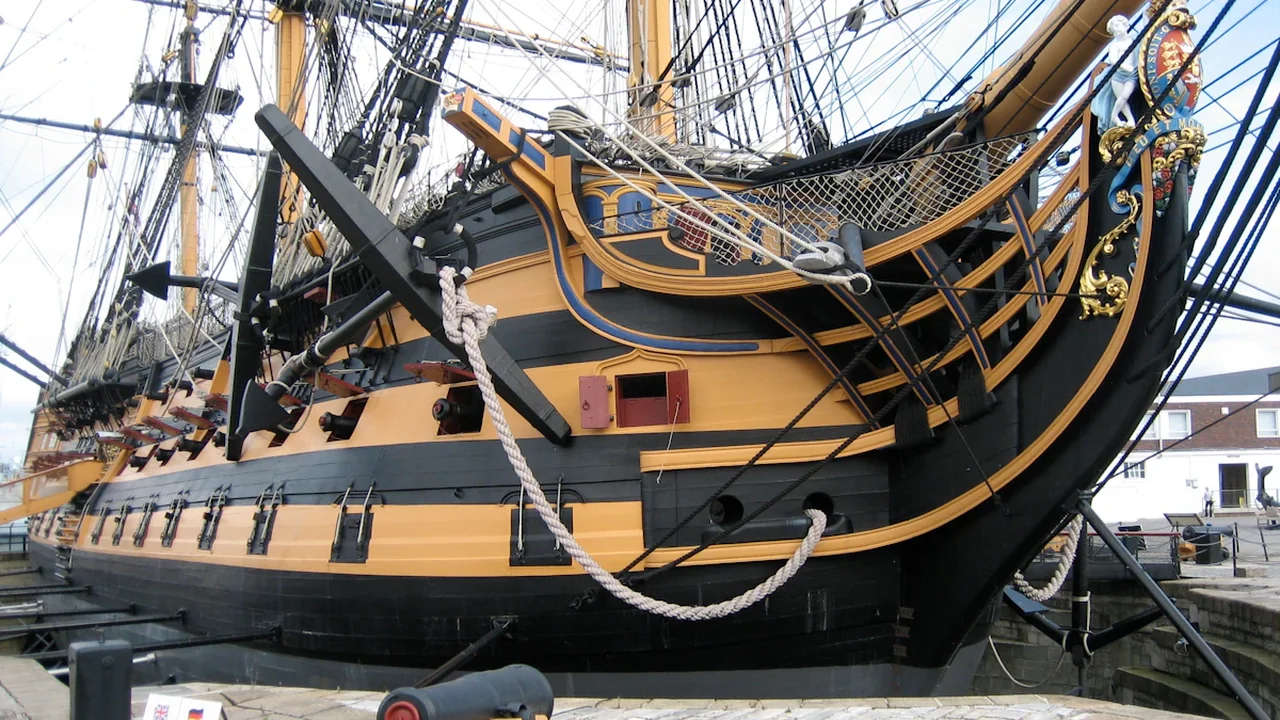
On 21 October 1805, a British-led fleet met French and Spanish ships off Cape Trafalgar, on Spain’s Atlantic coast. The British victory disrupted Napoleon’s plans for an invasion of Britain, while Admiral Horatio Nelson was killed during the fighting. In London, Trafalgar Square and Nelson’s Column later gave the battle a lasting place in public memory; the next milestone in that story was the column’s unveiling in 1843.
Where the Battle of Trafalgar was fought
Trafalgar was a naval battle of the Napoleonic Wars, fought at sea west of Cape Trafalgar in what is now southern Spain. The opposing fleets were British on one side and French and Spanish on the other. Britain was seeking to prevent the allied fleet from controlling the sea routes needed to threaten the British Isles.
The Royal Museums Greenwich dates the battle to 21 October 1805 and records that Nelson died during it. That date is why the anniversary is observed each year: it marks both a decisive fleet engagement and the loss of the British commander who led it.
How the fleets met on 21 October
The British fleet was commanded by Vice-Admiral Nelson. The combined French and Spanish fleet was commanded by French Admiral Pierre-Charles Villeneuve. Rather than approach in a single line parallel to the enemy, Nelson brought his ships toward the allied fleet in two columns, a maneuver that brought the fleets into close combat.
The fighting was intense and involved multiple ships at close range. British forces captured or destroyed a substantial part of the opposing fleet. The immediate military result was a British victory at sea and the destruction of the French and Spanish fleet’s ability to challenge British naval control in the same way at that moment.
That result should be kept distinct from the wider course of the Napoleonic Wars. Trafalgar did not end the wars, and it was not a land campaign or a settlement. Its significance lies in the naval outcome and in how that outcome affected the prospect of a French invasion of Britain.
Nelson’s role and death in the battle
Nelson’s command and tactics are central to accounts of Trafalgar. He led the British fleet into the engagement, placing himself where he could direct the action. That also exposed him to danger. During the battle, he was shot by a French marksman aboard the ship Redoutable.
Nelson was taken below deck and died later that day. His death became inseparable from the story of the victory: Britain had won a major naval engagement, but its most famous commander did not survive to see its outcome. The Royal Museums Greenwich account confirms that he was killed during the battle.
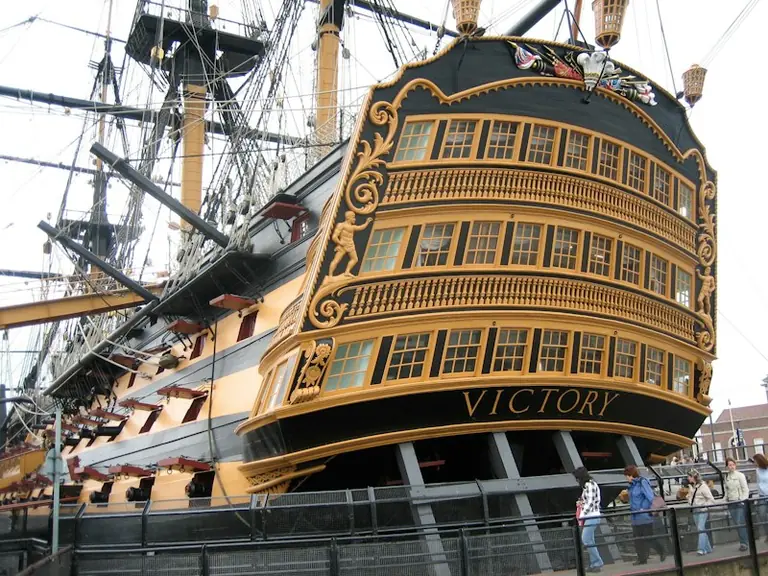
The battle’s human cost extended beyond Nelson. Sailors on both sides faced cannon fire, wreckage, fire and the danger of drowning. Remembering the event through Nelson alone can obscure the many crews who fought and the losses suffered by the French and Spanish as well as British ships.
What the victory meant for Britain
Trafalgar strengthened Britain’s position at sea and ended the immediate threat posed by the combined fleet’s ability to escort an invasion force across the Channel. It did not, by itself, decide every later campaign or bring the Napoleonic Wars to a close. The battle is best understood as a major naval victory with important strategic consequences, rather than as the sole cause of Britain’s eventual success against Napoleon.
Its place in British naval history reflects both the practical result and the public story built around it. The fleet’s victory became a national reference point, while Nelson’s death gave the event a personal and commemorative focus. Those strands—naval power, sacrifice and public remembrance—help explain why the anniversary continues to attract attention.
Trafalgar Square and Nelson’s Column in London
London’s Trafalgar Square is a later memorial landscape, not the site of the 1805 battle. The square takes its name from the naval victory, and Nelson’s Column stands at its centre as a public monument to the admiral. The setting connects a sea battle fought off Spain with a prominent civic space in the British capital.
Nelson’s Column was unveiled in 1843, almost four decades after the battle. That later date is a useful reminder that public memory took shape over time. The monument does not simply record what happened on 21 October 1805; it also shows how Victorians chose to commemorate Nelson and the victory in the heart of London.
For visitors, Trafalgar Square offers a way to encounter that legacy in person. The column and surrounding square make the anniversary visible beyond naval history books, while the Royal Museums Greenwich account provides a museum-based starting point for learning about the battle itself. The next verifiable milestone in London’s memorial story is the column’s unveiling in 1843.
Source: Royal Museums Greenwich
Context & actions About this article
Source check Historical context
Royal Museums Greenwich identifies 21 October 1805 as the battle date and records Nelson’s death during the battle.
- Battle date: 21 October 1805
- Nelson was killed during the battle
- The engagement took place off Cape Trafalgar
- Source
- Royal Museums Greenwich
- Scope
- United Kingdom
- Updated
- 2026-10-11 08:18
Source check
Report a trust issue
Send a clear signal to community moderation if the source, facts or context need review.



Comments