
The Department for Energy Security and Net Zero updated its UK weekly road fuel price series on 29 September 2026 with averages for the week beginning 28 September. That gives drivers a recent national reference point for October budgets. Your likely fill-up cost, though, depends on the litres you buy and the price displayed at the forecourt you use.
What the latest weekly figures can tell you
The government series reports average retail petrol and diesel prices across the UK. Its latest covered week begins Monday 28 September 2026. To judge the weekly movement, compare each fuel with its own figure for the preceding week, beginning 21 September. Petrol and diesel should be compared separately because a change in one does not establish a change in the other.
The information available here confirms the latest reporting week and update date, but does not include the numeric prices for either week. It therefore does not establish whether the national petrol or diesel average rose, fell or stayed level. The two sets of figures need to be read from the Department for Energy Security and Net Zero’s weekly road fuel prices before quoting a change or using an average in a budget.
Read also: UK fuel prices: when a cheaper pump is worth the detour
A weekly average is a reference for a particular period and fuel type. It cannot tell you the price at an individual pump. Even a correctly calculated national change may have little bearing on the price difference between two nearby stations on the day you need to refuel.
Calculate a fill-up using the price you can actually pay
Multiply the number of litres you expect to buy by the local pump price per litre. If the display shows pence per litre, divide the result by 100 to get pounds: litres × pence per litre ÷ 100 = fill-up cost in pounds. Use the posted price for the fuel your vehicle takes.
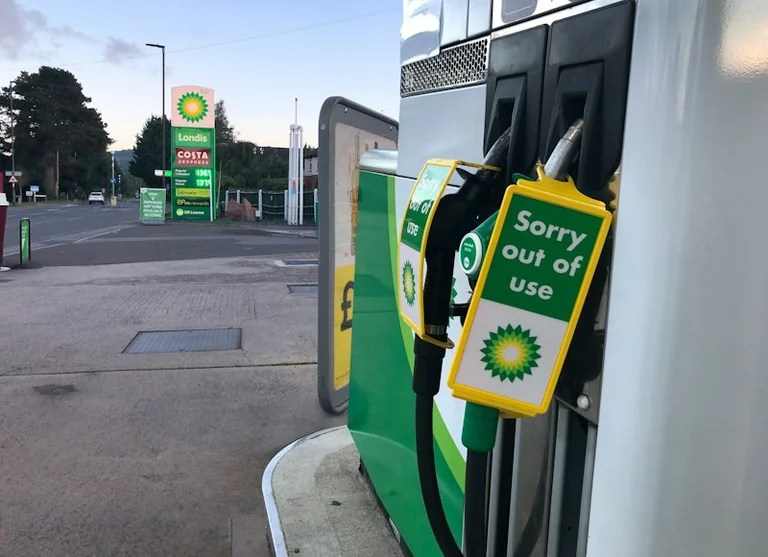
For a 40-litre purchase, each 1p-per-litre difference changes the bill by 40p. A 5p-per-litre difference changes it by £2. Those are arithmetic examples, not claims about current pump prices. If you usually buy a different amount, multiply the price difference in pence by your usual litres and divide by 100.
A monthly estimate also needs a realistic number of refuelling stops. Someone buying 40 litres twice in October would budget for 80 litres at the prices they expect to encounter. That estimate can change if they drive farther, buy more fuel, or find a different price when they reach the pump. A full tank is not a fixed purchase amount: the cost depends on how many litres are needed to fill it that day.
Why a nearby price check matters
Before setting an October fuel budget, check prices at forecourts you would reasonably use and compare the same fuel type. Note when each price was displayed or reported, since a price seen earlier may have changed. Include any extra travel needed to reach a cheaper station when deciding whether a small per-litre saving is worthwhile.
Use the national weekly series to understand the broader movement once both weeks’ petrol and diesel figures are available. For the next fill-up, use a current local price and the litres you plan to buy; those two numbers give the estimate closest to the bill you will face.
Source: Department for Energy Security and Net Zero
Context & actions About this article
Source check Price data
The Department for Energy Security and Net Zero updated its weekly UK fuel-price series on 29 September 2026; numeric prices were not supplied for this article.
- Check the petrol and diesel rows for the weeks beginning 28 and 21 September 2026.
- Check a current local pump price before calculating a fill-up.
- Source
- Department for Energy Security and Net Zero weekly road fuel prices
- Scope
- United Kingdom
- Updated
- 2026-10-05 09:43
Source check
Report a trust issue
Send a clear signal to community moderation if the source, facts or context need review.



Comments