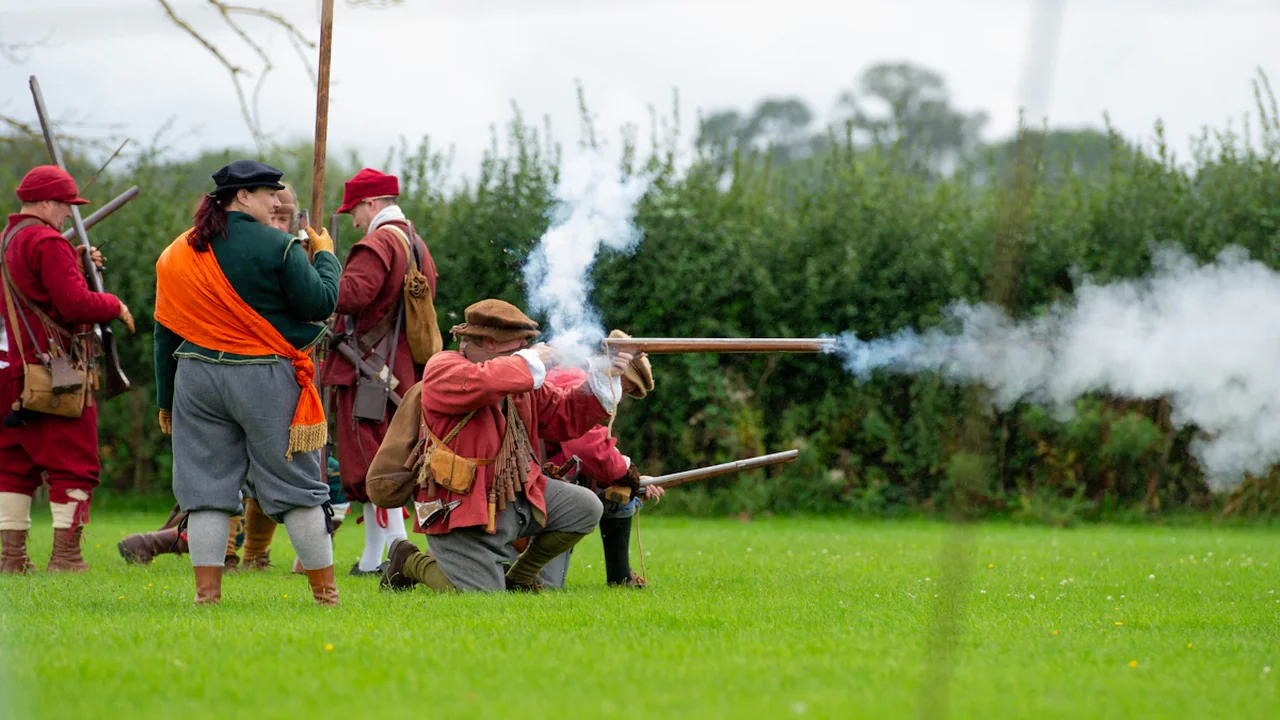
The Gunpowder Plot was a failed 1605 conspiracy to blow up the House of Lords during the state opening of Parliament. Guy Fawkes was among the conspirators, but the plan belonged to a group acting amid deep religious and political tensions. Its failure made November 5 an annual date of public commemoration, and the date’s meaning has shifted over time. Understanding why Parliament was chosen helps explain both the event and its place in public memory.
Why the House of Lords was the target
The conspirators planned to strike when Parliament assembled for its state opening. The intended explosion would have attacked the political centre of the kingdom at a moment when the monarch, peers and other leading figures were gathered. The target was therefore more than a building: it was the institution through which the government of the realm was represented.
UK Parliament’s historical account places the plot within the institution’s history and the evolution of parliamentary authority. That setting helps explain the scale of the intended attack. A successful explosion would have threatened the king and those assembled with him, making the conspiracy an assault on the political order as well as an attempt at mass violence.
The timing also matters. The state opening brought the monarch and Parliament together, which is why the planned attack was tied to that occasion. The plot’s parliamentary setting is central to understanding what the conspirators meant to strike at—and why the event remained part of the country’s political memory.
Guy Fawkes was one of several conspirators
Guy Fawkes became the plot’s best-known face, but he was one participant in a wider conspiracy. Popular retellings can make him seem like the whole story; the historical account instead points to a group of men and their shared plan to destroy the House of Lords.

That distinction is useful when separating the established outline from later storytelling. The confirmed core is clear: a conspiracy was formed in 1605, the intended target was the House of Lords, and Fawkes was among those involved. Treating him as the sole author of the plot compresses a group action into a single character and leaves out the wider political purpose.
Religious conflict shaped the plot’s setting
Religion and political power were closely bound together in the period. The conspirators opposed the Protestant government, and that opposition shaped their choice of target and the scale of the violence they planned. Their actions were an extreme response to the religious settlement of the time; they should not be treated as representative of an entire community.
This context adds more than the familiar image of Fawkes with a lantern. The parliamentary target, the state opening and the religious tensions fit together: the conspirators aimed at the people and institution they associated with the government they opposed. The plot was a specific conspiracy, not simply a tale about a memorable individual.
How November 5 became a day of commemoration
The failure of the plot gave November 5 its lasting significance. Annual observances marked the king’s survival and the thwarting of the attack. Over time, public rituals and seasonal customs made the date familiar, while Guy Fawkes’s name became closely attached to them.

Commemoration keeps an event in view, but it can also simplify it. Repeated observances made the danger and the plot’s failure easy to recall; the focus on Fawkes could meanwhile obscure the wider group behind the plan. His prominence in the rituals is part of the history of remembrance, rather than a complete account of who was involved.
What November 5 means in public memory
For many people today, November 5 brings to mind bonfires, fireworks and the figure of Guy Fawkes. These customs connect contemporary observance with the plot, even as its meaning has broadened and changed across generations. The date remains culturally familiar partly because it joins a historical event to recurring public rituals.
Reading the commemoration alongside the history brings the two into focus: the annual celebration recalls a failed attack on Parliament, while the familiar image of Fawkes represents only one part of a group conspiracy. The story’s starting point is the planned attack on the House of Lords at the state opening, in 1605.
Source: UK Parliament
Context & actions About this article
Source check Historical context
UK Parliament’s historical account identifies the 1605 conspiracy’s target and Guy Fawkes among those involved.
- The plot targeted the House of Lords
- The conspiracy took place in 1605
- Guy Fawkes was among those involved
- Source
- UK Parliament
- Scope
- United Kingdom
- Updated
- 2026-10-23 10:28
Source check
Report a trust issue
Send a clear signal to community moderation if the source, facts or context need review.




Comments