
The Gunpowder Plot was a failed 1605 conspiracy to destroy the House of Lords during the State Opening of Parliament. The latest point to keep in view as 5 November approaches is the distinction between the documented discovery and the traditions that later grew around it: authorities found Guy Fawkes guarding explosives beneath the Palace of Westminster, while Bonfire Night customs developed over time. Britain’s annual commemoration recalls the plot’s failure, but the familiar image of a lone “Guy” is only part of the story.
How the Gunpowder Plot unfolded
A group of Catholic conspirators planned to kill King James I and members of Parliament by blowing up the House of Lords. Fawkes was the man found with the explosives, but he was one participant in a wider plan. The intended target was Parliament during its State Opening, not an attack carried out by Fawkes acting alone.
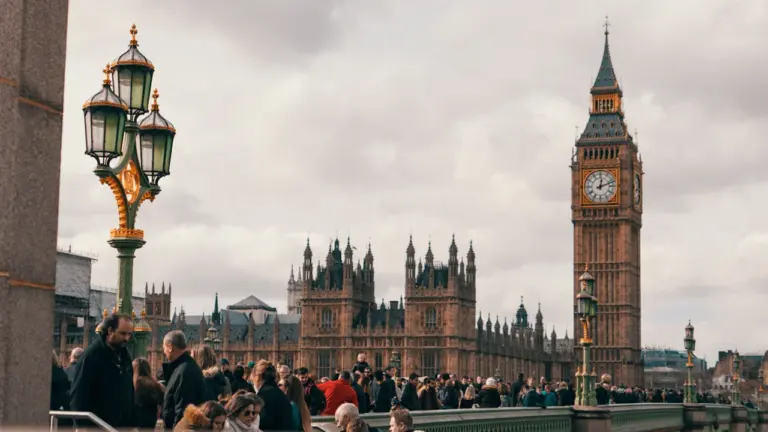
The key date was 5 November 1605, when Parliament was due to meet. Fawkes was discovered in the cellars beneath the Palace of Westminster, guarding barrels of gunpowder. The plot failed before the planned explosion could take place.
The UK Parliament’s historical account provides the source context for this central outline: it describes the conspiracy to blow up Parliament and records Fawkes’s discovery with the explosives. This supports the basic sequence, while popular retellings can flatten a group conspiracy into a story centred on one person. Keeping those points separate helps explain both what is documented and what the familiar image leaves out.
The political and religious setting
The conspiracy belongs to the early Stuart period, when religious allegiance was closely tied to political power. James I succeeded Elizabeth I in 1603. England’s government was Protestant, and Catholics faced restrictions and pressure to conform to the established church.
Some Catholics had hoped that a new monarch might ease those restrictions. Their disappointment formed part of the background to the plot. The conspirators chose violence: they planned to destroy the king and Parliament rather than seek change through ordinary political means.
That context helps explain the grievances behind the plan without excusing it or treating Catholics as a single political group. The conspirators were a small band; their actions do not represent the beliefs or conduct of all Catholics in England. The political aim also matters: destroying the House of Lords during the State Opening meant attacking the institutions gathered around the monarch and Parliament, not simply targeting a building.
What followed the discovery
The discovery prevented the planned explosion. The plotters were pursued, and some were captured or killed. Fawkes was arrested and questioned; he and other surviving conspirators were later tried and executed. The failed attempt became a powerful warning in official memory about threats to the monarch and Parliament.
The broad outline is clearer than every detail of planning and discovery. The Parliament account confirms the intended attack and Fawkes’s presence with the explosives. It does not make him the only conspirator or, by itself, settle every detail that later retellings may include. That is why the source-backed account is best read as a group plot whose best-known participant became its public face.
How the anniversary became Bonfire Night
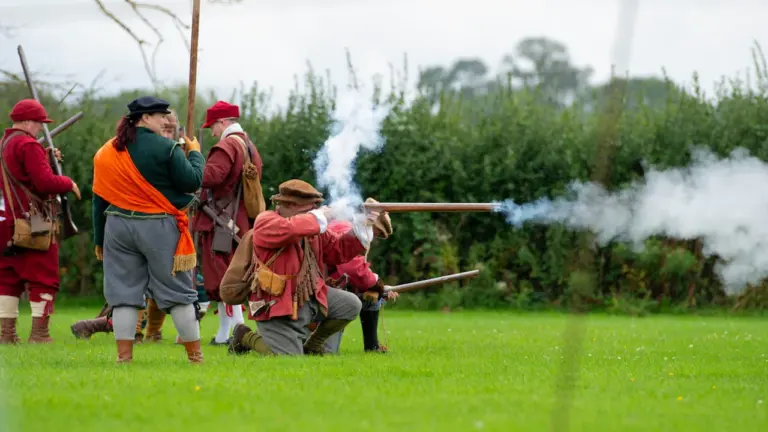
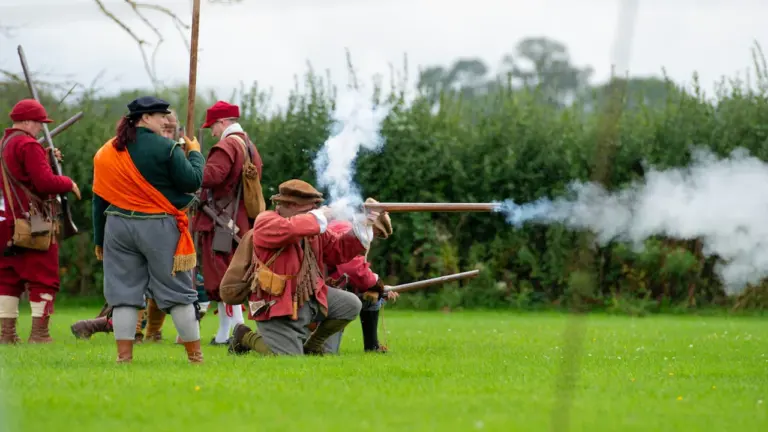
After the plot was discovered, 5 November became a date for public thanksgiving and commemoration. Over time, the observance developed into Bonfire Night, also called Guy Fawkes Night. Bonfires and fireworks became central features, and people began making effigies known as “Guys” to burn on the fires.
These are later remembrance traditions, not evidence of how the conspiracy unfolded in 1605. The historical event was an attempted attack on the House of Lords; the fires, fireworks and effigies belong to the changing ways people marked its failure. The distinction lets the anniversary carry both meanings: a record of a failed political conspiracy and a long-running public custom.
The next annual milestone is 5 November, when Bonfire Night again recalls the discovery beneath the Palace of Westminster. The historical account’s starting point remains the 1605 discovery of Fawkes guarding explosives intended for an attack on Parliament.
Source: UK Parliament
Context & actions About this article
Source check Historical context
The UK Parliament account supports the plot’s central details; the article distinguishes them from later Bonfire Night traditions.
- The conspiracy targeted Parliament in 1605.
- Fawkes was found guarding explosives beneath the Palace of Westminster.
- Bonfire Night customs developed as later remembrance traditions.
- Source
- UK Parliament
- Scope
- England
- Updated
- 2026-10-30 09:52
Source check
Report a trust issue
Send a clear signal to community moderation if the source, facts or context need review.

Comments