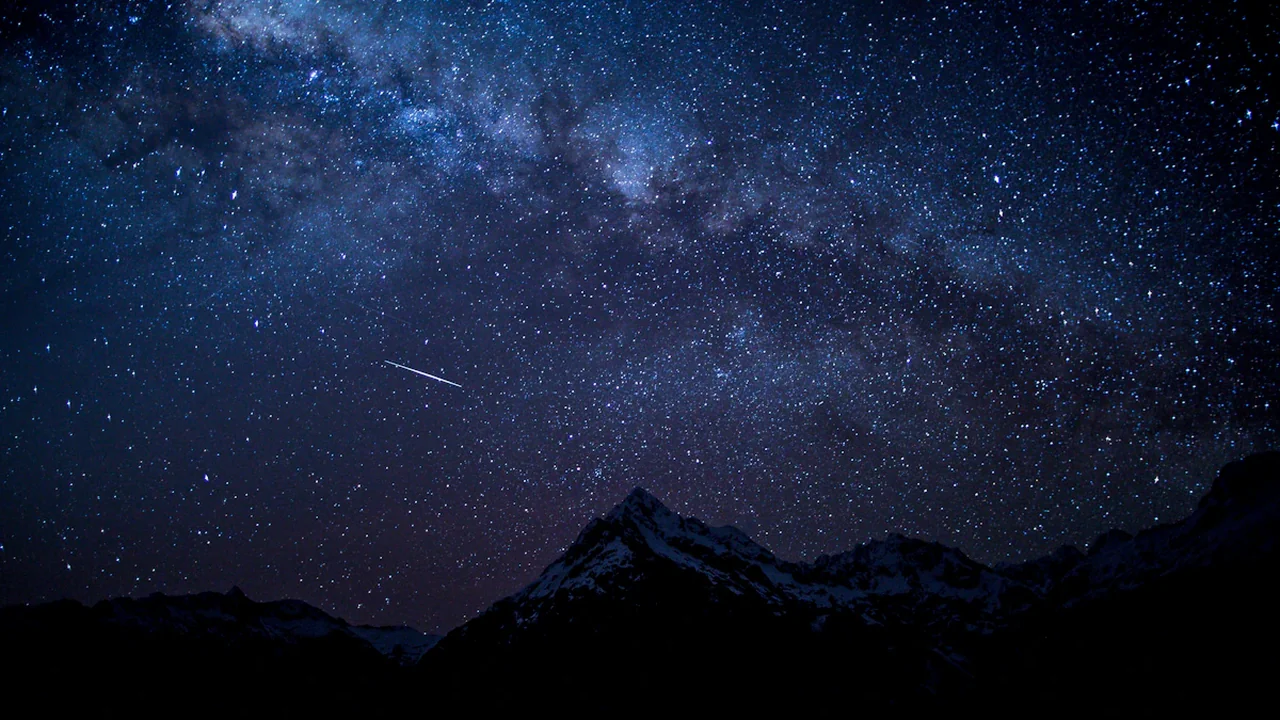
The Perseid meteor shower can reward UK skywatchers with a low-cost evening outdoors, but a clear, safely accessible dark spot matters far more than specialist equipment. Before setting out tonight, compare the latest local cloud forecast with the Moon’s brightness and only travel if conditions make the trip worthwhile.
Main takeaways
- Check cloud cover for your exact location, not just the national forecast.
- Use your eyes: a telescope narrows the view and is unnecessary.
- Choose a permitted, dark public place with a clear, wide horizon.
- Avoid road verges, private land and unfamiliar routes after dark.
Start with cloud and moon conditions near you
Cloud can vary sharply between nearby towns, coasts and higher ground, and it can change through the evening. Use the Met Office UK forecast for the place where you plan to stand, then check again shortly before leaving. A promising forecast at home is not a guarantee at a hill, beach or rural car park several miles away.
Moonlight is the other key check. A bright Moon can wash out faint meteors, while a lower or less prominent Moon leaves more of the sky visible. If cloud is extensive or moonlight is strong at your preferred spot, it may be more sensible to stay local and try during a clearer spell than make a long trip.
Read also: UK weather warnings today: check rain, wind and thunderstorms
The Perseids return every year as Earth passes through debris left by comet 109P/Swift-Tuttle, according to NASA. That reliable annual pattern does not make any one evening predictable: cloud, local light pollution and how long you watch all affect what you see.
How to watch without buying equipment
No telescope or binoculars are required. In fact, magnifying equipment shows only a small patch of sky, while meteors can appear anywhere overhead. Royal Museums Greenwich recommends dark-sky, unaided viewing for the annual shower; the useful approach is to settle in, look broadly upward and give your eyes time to adjust.
Find a comfortable position with as much open sky as possible. The radiant—the point in the sky from which Perseid trails appear to fan out—is useful for orientation, but do not stare only at it. Meteors farther away from the radiant can leave longer, more memorable trails.
Give your eyes a real chance
Put away bright phone screens once you arrive. It can take roughly 20 minutes for your eyes to adapt to darkness, and repeated white-light checks undo much of that adjustment. If you need light for a path, map or bag, use a dim red light and point it down.
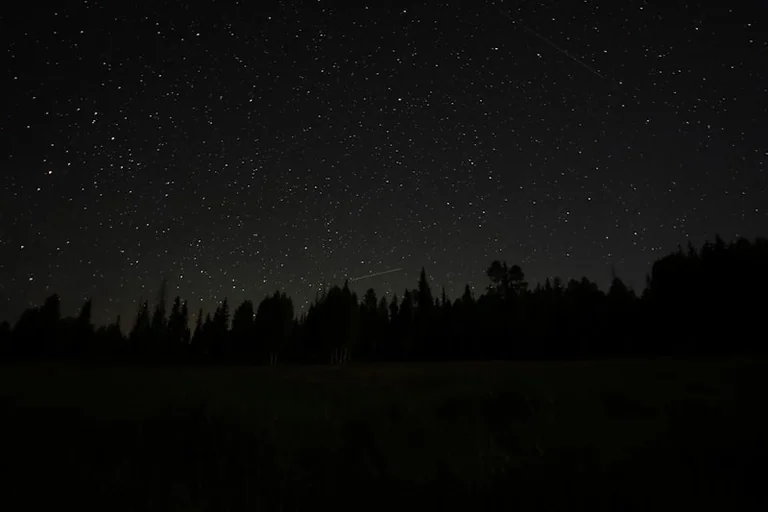
Bring a reclining chair or picnic mat if practical, plus warm layers even after a mild day. Waiting comfortably is part of the method: there is no dependable minute-by-minute meteor timetable and no honest guaranteed count for a UK observer.
Choose a dark place that is also safe and permitted
A darker location can reveal more faint meteors, but it should never mean taking risks. Good options may include an authorised public viewpoint, a recognised dark-sky site, a campsite where you are staying, or another public location you can enter and leave safely after dark. Check access rules, closing times and parking restrictions before travelling.
Do not stop on a road verge, stand beside fast traffic, climb gates, or enter private farmland without permission. A place that looks dark on a map may have no safe footpath, poor phone coverage or an awkward exit in the dark.
Take a charged phone, suitable footwear, water and a layer for wind or damp. Tell someone where you are going, when you expect to return and how you plan to travel home. If you are going with children or a group, agree a meeting point before lights are switched off.
A simple plan for tonight
- Check your chosen location’s cloud forecast and the Moon’s position before leaving.
- Pick a permitted public spot away from direct street lighting, with a broad view of the sky.
- Arrive while there is still enough light to identify paths, hazards and your route back.
- Settle in, keep phone use to a minimum and allow your eyes to adapt.
- Watch a wide area of sky patiently rather than tracking one point.
- Leave if weather, access or personal safety becomes a concern.
The most useful final check is the local forecast just before departure: a small break in cloud near you may justify an evening outside, while a fully overcast sky is a good reason to save the journey for another clear night.
Source: Royal Museums Greenwich
Context & actions About this article
Source check Planning your viewing
This guide combines annual Perseid viewing advice with a reminder to check local weather before travelling.
- Check cloud cover for your exact viewing location.
- Check moon conditions for the planned viewing time.
- Confirm that your chosen location is public and accessible after dark.
- Source
- Royal Museums Greenwich
- Scope
- United Kingdom
- Updated
- 2026-08-13 08:37
Source check
Report a trust issue
Send a clear signal to community moderation if the source, facts or context need review.


Comments