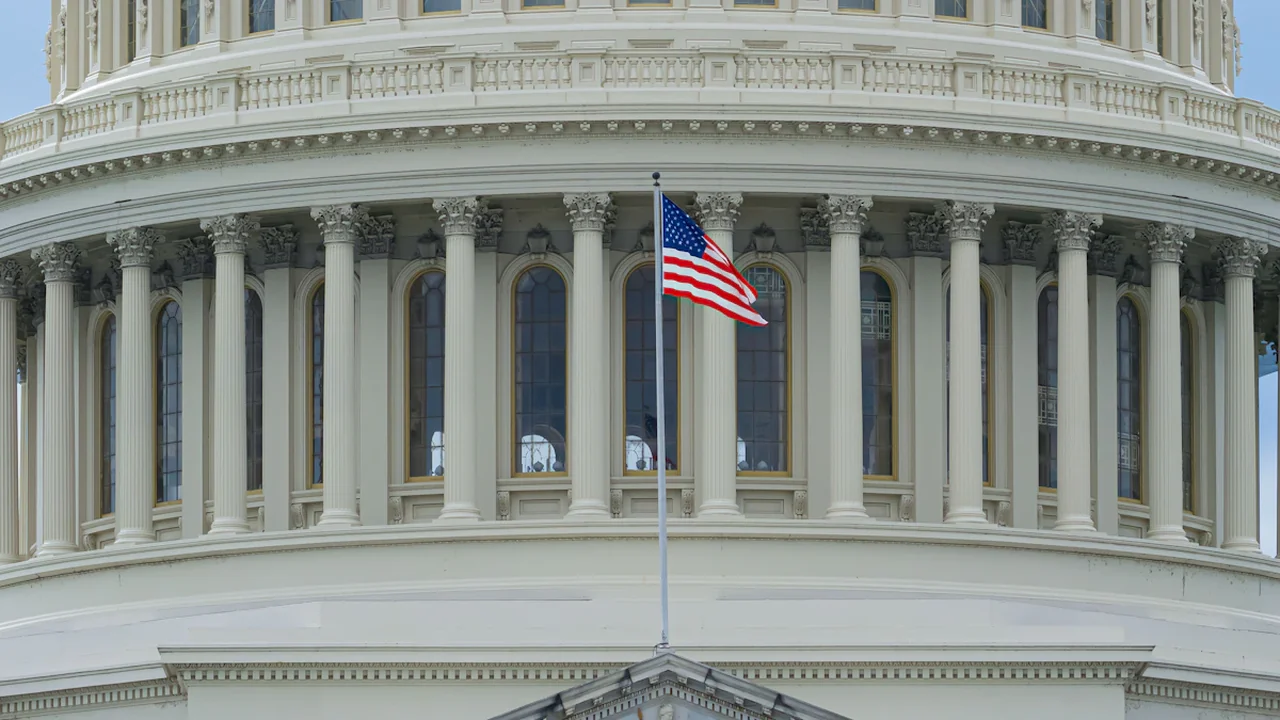
The United States will hold its midterm elections on 3 November 2026, choosing members of Congress who can influence trade laws, federal spending and scrutiny of US foreign policy. For people in the United Kingdom, the result could matter through decisions affecting NATO and the wider US relationship with Europe, though an election alone does not determine those policies.
What Americans are voting for
Midterms are congressional elections held between presidential elections. Voters choose representatives to serve in the House of Representatives and senators to serve in the Senate. Together, those chambers make up Congress, the federal legislature. The vote is therefore about who will hold seats in each chamber and, in turn, how Congress may approach its legislative and oversight work.
The election date and federal context are set out by USA.gov’s guide to midterm elections. The result does not itself enact a policy. It changes the membership of Congress, where proposals must be considered through the legislative process.
How congressional control can shape policy
Congress can affect trade through legislation and federal spending through budget decisions. If the balance of seats changes, lawmakers’ priorities and the prospects for proposed measures may change too. That creates a possible route from the election to decisions with international effects, including those relevant to Britain. It is a route of influence, not a guarantee that a particular trade or spending decision will follow.
Congress also scrutinises US foreign policy, including support for NATO. Oversight gives lawmakers a way to examine and question government policy. It should not be confused with Congress directing every foreign-policy decision: the election may affect the political conditions for scrutiny and legislation, but does not settle the course of US policy on its own.
Why the result matters to the UK
Britain’s interests may be touched by US decisions on trade, NATO and the broader relationship between the United States and Europe. Congressional action on trade laws or budgets can create potential effects beyond US borders, while scrutiny of NATO support can make the alliance an issue for congressional attention. These are channels through which the result could matter to UK readers; they are not predictions about what the next Congress will do.
The implications depend on what lawmakers pursue after the election and how legislation, budgets and oversight develop. The vote is one part of the process. It does not, by itself, establish a change in trade policy, spending or US foreign policy.
What to check after election day
For a fuller picture, follow the eventual composition of both chambers and the legislation, budget decisions and oversight activity that follow. Candidate lists and party control are live information and should be checked against authoritative sources as the election approaches and after results are confirmed. USA.gov supplies the scheduled date and federal context; it does not establish the eventual result or its policy consequences.
Source: USA.gov
Context & actions About this article
Source check How Congress works
The election date is listed by USA.gov; the policy effects described here are possible channels of congressional influence, not predictions of election results or future decisions.
- USA.gov identifies 3 November 2026 as the midterm election date.
- Congressional authority over legislation and spending is shared across the House and Senat...
- Foreign policy is shaped by Congress and the president, with different constitutional role...
- Source
- USA.gov
- Scope
- United States and United Kingdom
- Updated
- 2026-10-22 10:29
Source check
Report a trust issue
Send a clear signal to community moderation if the source, facts or context need review.




Comments