By AtheneNet Culture Desk
Published: August 30, 2026
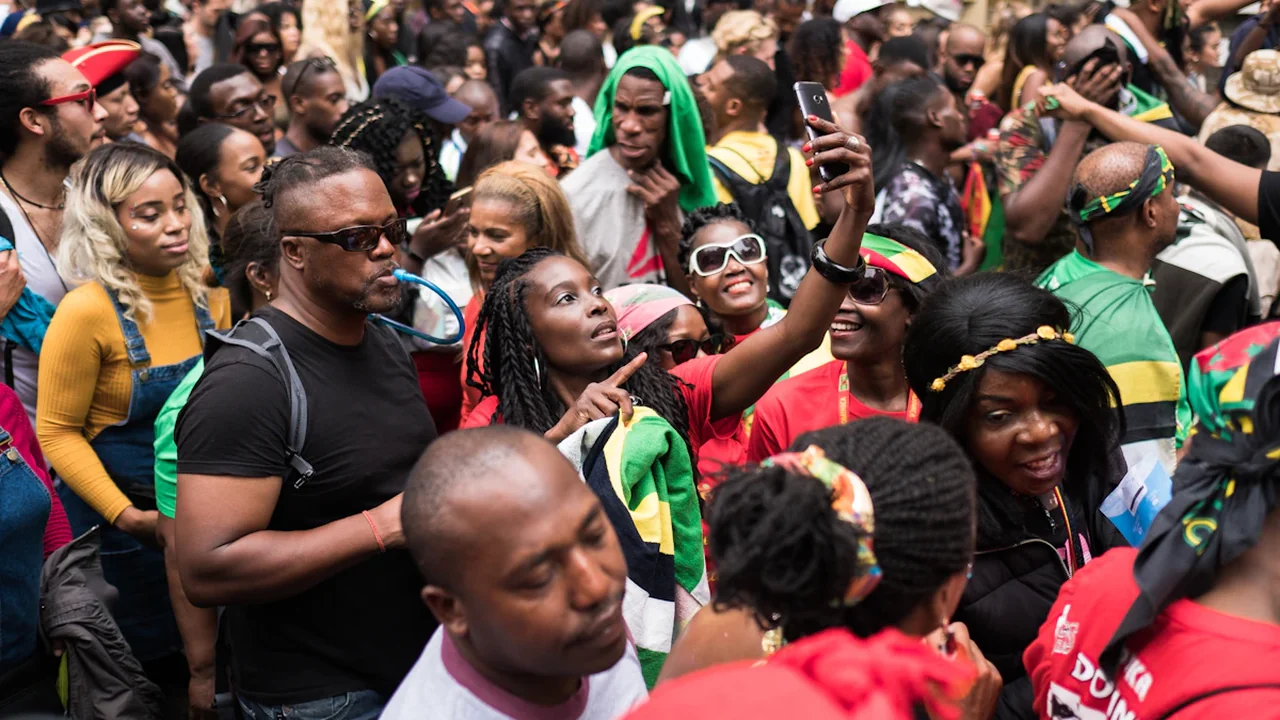
Across Notting Hill during the late-August bank holiday weekend, steelpan ensembles, mobile sound systems and costumed mas bands turn neighbourhood streets into a Caribbean cultural space. The modern Notting Hill Carnival grew through several connected initiatives, not one uncontested founding moment, and its history belongs to the organisers, musicians, artists and residents who sustained them.
The distinction between two early events is important. Trinidad-born journalist and activist Claudia Jones organised an indoor Caribbean carnival in London in 1959. Seven years later, community organiser Rhaune Laslett helped establish a street festival in Notting Hill. Both are significant precursors, but they were different events created in different settings.
Read also: Why 29 September matters to London’s policing history
Caribbean migration changed post-war London
After the Second World War, people from across the Caribbean moved to Britain in greater numbers, including arrivals from Jamaica, Trinidad and Tobago, Barbados and other former British colonies. They came as British subjects to work, study and build families, yet frequently encountered discrimination in housing, employment and public life.
Notting Hill became home to a substantial Caribbean population, although overcrowding, exploitative landlords and racial hostility shaped everyday experience. The racist violence seen in the area in 1958 forms part of the carnival’s historical setting, but it does not fully explain the event.
Caribbean Londoners were also building newspapers, churches, clubs, food businesses, music networks and mutual-support organisations. Carnival developed within that wider work of creating community and maintaining cultural practices in a city where migrants were often pressured to assimilate.
This makes the event more than a reaction to conflict. It is equally a story of artistic knowledge, neighbourhood organisation and the determination to make Caribbean life publicly visible.
Claudia Jones created an indoor Caribbean Carnival in 1959
Claudia Jones, the founder and editor of the West Indian Gazette, organised a Caribbean carnival at St Pancras Town Hall in January 1959. Often remembered under the description “Caribbean Carnival,” it was an indoor, ticketed production rather than a street procession through Notting Hill.
The programme brought together music, dancing, pageantry and performance associated with Caribbean carnival traditions. It offered community affirmation at a time of acute racial hostility and helped present Caribbean culture to a wider British audience.
Jones is consequently described in many accounts as a mother of Caribbean carnival in Britain. That recognition concerns her pioneering cultural and political work; it should not be turned into the inaccurate claim that her 1959 production was simply the first edition of the present street event.
Her carnival continued in indoor venues during the early 1960s. Its legacy lies in showing how performance, journalism and organising could create a shared public identity for Britain’s growing Caribbean population.
Rhaune Laslett’s 1966 festival took celebration into the streets
A separate strand emerged within Notting Hill itself. Rhaune Laslett, a local community organiser, developed neighbourhood events intended to bring together children and residents from the area’s different communities. Her 1966 Notting Hill street festival is widely identified as a key starting point for the outdoor event.
The festival reflected the district’s mixed population, but Caribbean participation gave its street procession a defining energy. Accounts of the event highlight the involvement of steelpan musicians, whose movement through the neighbourhood helped transform a local fair into a form recognisably connected with Caribbean carnival.
The relationship between Jones’s indoor productions, Laslett’s street festival and the later carnival is therefore best understood as layered. Jones established an influential model of Caribbean celebration in Britain. Laslett helped create a neighbourhood festival on the streets where the modern event developed. Caribbean performers and residents then expanded and reshaped it over successive years.

A short chronology clarifies the distinction:
- 1958: Racial violence in Notting Hill exposes hostility faced by Caribbean residents.
- 1959: Claudia Jones stages an indoor Caribbean Carnival at St Pancras Town Hall.
- 1966: Rhaune Laslett helps organise a community street festival in Notting Hill.
- 1970s onward: Caribbean-led bands, sound systems and organisers increasingly define the event’s form.
Steelpan and sound systems built the carnival’s musical identity
Steelpan linked the London celebration directly to Trinidad and Tobago, where the instrument developed through innovation in working-class communities. A steel band does more than accompany a parade: its tuned metal instruments produce interlocking rhythm, bass, melody and harmony, allowing an ensemble to carry a complete musical arrangement through the street.
Calypso supplied another connection to Trinidadian carnival. Its songs combine melody and rhythmic drive with storytelling, humour, social observation and political commentary. Calypsonians historically used performance to narrate public life, making the genre particularly suited to carnival’s mixture of celebration and critique.
Soca, which emerged in Trinidad and Tobago during the 1970s, brought a faster, dance-oriented carnival sound. It became central to mas bands and procession routes, while later artists continued to develop the genre across the Caribbean and its diaspora.
Notting Hill also acquired a powerful sound-system culture shaped especially by Jamaican musical traditions. Crews assembled large speaker stacks and created distinct street arenas for reggae, dub, dancehall and related forms. Sound systems widened the event beyond the Trinidad-style procession and expressed the diversity of Caribbean London.
Their role was technical, social and cultural. Operators selected records, controlled sound, introduced performers and gathered audiences around particular musical communities. Together with live bands and steel orchestras, they made the carnival a meeting place for multiple Caribbean histories rather than a representation of one island alone.
Mas turns costume into collective storytelling
“Mas” is short for masquerade, but it means more than wearing a costume. In Caribbean carnival traditions, designers develop a theme and translate it into colour, structure, movement and character. Participants join organised bands whose costumes may interpret nature, history, mythology, politics or imagined worlds.
Creating mas requires work long before the procession begins. Designers, wire-benders, costume makers, choreographers, musicians and volunteers collaborate to produce sections that can move as a coherent presentation. Children’s mas also passes those skills and traditions to younger generations.
This collective process explains why spectatorship is only one part of carnival. The culture is made through participation: rehearsing pan, constructing costumes, maintaining speakers, preparing food, stewarding routes and organising local groups.
The bank holiday carries meaning beyond entertainment
The modern carnival occupies public space on a scale its early organisers could not take for granted. For Caribbean Britons, it can express ancestry, belonging and the right to shape London’s cultural identity. For the wider city, it demonstrates how migration changes national culture through sustained local participation.
That meaning does not remove the event’s tensions. Questions about policing, safety, funding, commercial influence and the effect on residents have accompanied its growth. Nor is the Caribbean diaspora a single cultural bloc: carnival contains different island traditions, generations, musical preferences and ideas about its future.
Those debates sit alongside an enduring achievement. An indoor production associated with Claudia Jones, a community street festival led by Rhaune Laslett and decades of Caribbean-led organising all contributed to the carnival known today. The official Notting Hill Carnival organisation provides current event and cultural information, while Encyclopaedia Britannica places its development within the history of London’s Caribbean community.
Source: Notting Hill Carnival
Context & actions About this article
Source check Historical context
This account distinguishes the carnival’s major precursors while recognising the Caribbean communities that developed its modern form.
- The 1959 event organised by Claudia Jones was held indoors at St Pancras Town Hall.
- Rhaune Laslett’s 1966 initiative was a community street festival in Notting Hill.
- The modern event developed through later Caribbean music, mas and neighbourhood organising...
- Source
- Notting Hill Carnival
- Scope
- London
- Updated
- 2026-09-29 09:37
Source check
Report a trust issue
Send a clear signal to community moderation if the source, facts or context need review.

Comments