Every charming park, palace garden or green city square has its creator. Landscape design is one of the oldest yet fastest-growing arts in Europe. From royal gardens to modern green cities, it subtly shapes our outdoor spaces. Let us look at the roots of this field, its emergence as an industry, and meet five Europeans who continue to inspire garden creators around the world.
Gardens created by people, not nature
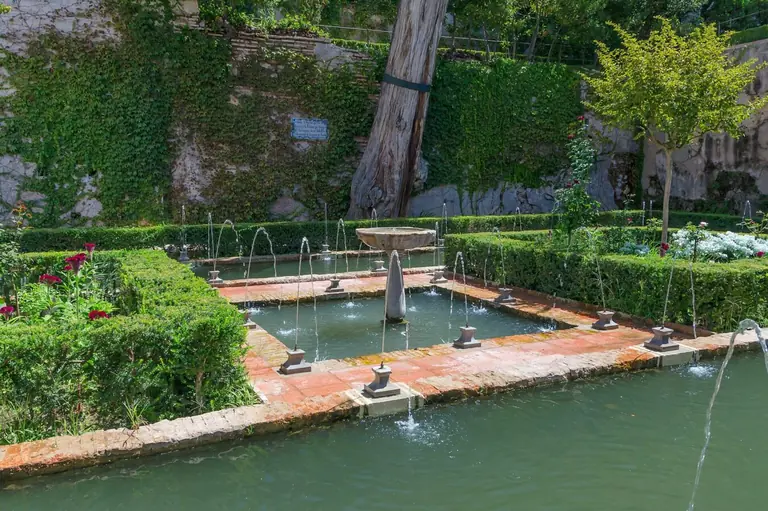
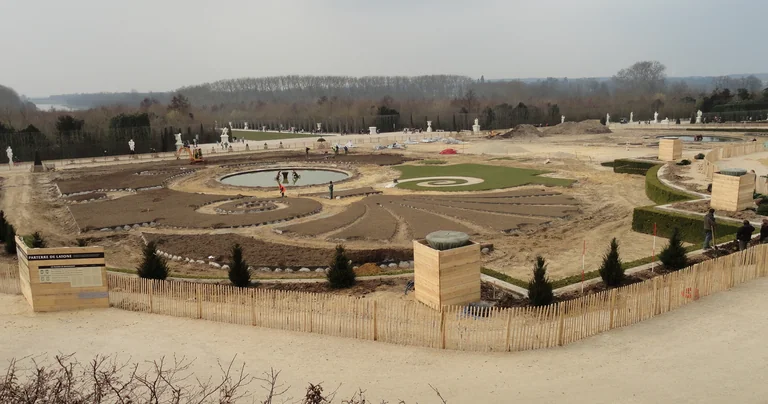
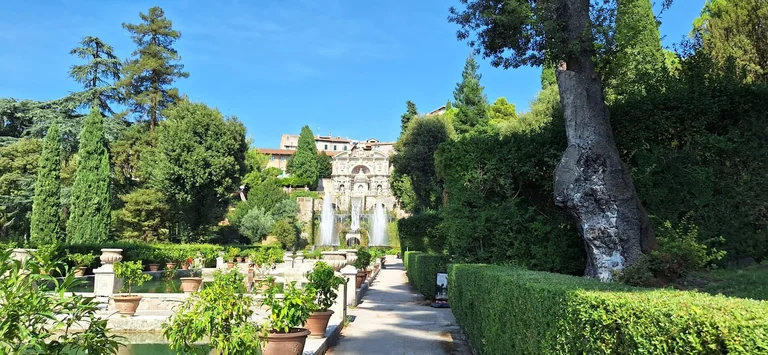
For a long time, landscape art was associated with the luxurious gardens of palaces and estates. Moorish gardens on the Iberian Peninsula left one of the most striking marks: the courtyards of Granada’s Alhambra and Generalife, full of water, shade and fragrance, are still regarded as one of Europe’s finest garden ideals. A different school emerged in Renaissance Italy: geometric villa gardens with terraces and fountains, such as the famous Villa d’Este near Rome, became the beginning of the European “created” garden. In 17th-century France, André Le Nôtre perfected the strict, symmetrical “French garden” at Versailles, while 18th-century England saw a rebellion against such order—the free English landscape park, imitating the natural landscape, was born.
When the profession was born
Although people have created gardens for millennia, the profession itself is relatively young. The term “landscape architecture” was coined in 1828 by the Scot Gilbert Laing Meason and popularised by the 19th-century encyclopaedist John Claudius Loudon. The field became an independent profession in the second half of the 19th century, when Frederick Law Olmsted officially called himself a “landscape architect” in 1863 while designing New York’s Central Park. For this reason, the 19th century is most often considered the beginning of the industry. The International Federation of Landscape Architects (IFLA) was founded in Cambridge in 1948, with the Briton Sir Geoffrey Jellicoe as its first president.
How estate gardens grew into a billion-dollar market
The history of landscape design is a story of how greenery became an everyday part of life rather than a privilege. Industrial development in cities in the 19th century created a need for public parks—true “green lungs” for residents. Modernism brought new forms in the 20th century, and today the field is shaped by ecology, climate change and the need for wellbeing: green infrastructure, rain gardens and sustainable cities. The market has grown too: according to Grand View Research, the global landscape services market was worth around US$330 billion in 2024 and is expected to grow to almost US$485 billion by 2030 (average annual growth of 6.6%).
Five Europeans who changed the art of gardens
The history of landscape design is best told through people. Here are five European masters—one from each of several countries and eras.
Lancelot “Capability” Brown · United Kingdom
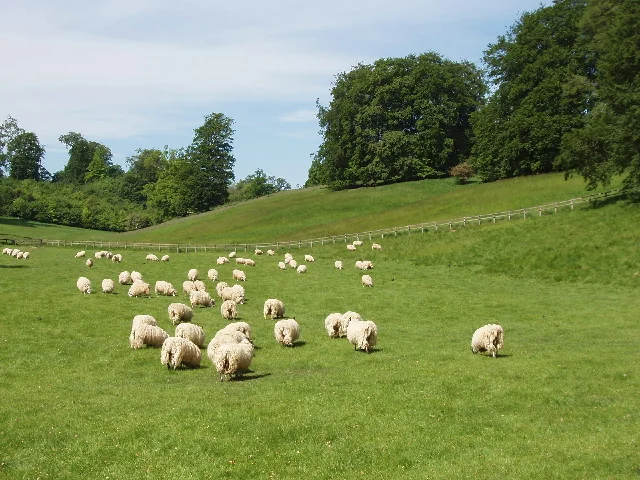
Lancelot Brown (1716–1783), who worked in the 18th century, is considered the father of the English landscape park. He earned the nickname “Capability” by saying that his clients’ estates had “potential” (English capabilities) to become beautiful landscapes. During his lifetime, he transformed around 250 estate parks—including Blenheim and Chatsworth—creating rolling meadows, winding lakes and islands of trees that became a new standard of beauty and still shape the image of the English countryside today.
Pietro Porcinai · Italy
The Florentine Pietro Porcinai (1910–1986) was Italy’s leading landscape architect of the 20th century and one of the founders of IFLA. He sought to make gardens look as though nobody had created them—as though they blended naturally into their surroundings. His works, such as the park at the headquarters of the “Mondadori” publishing house, created with Oscar Niemeyer, and the Pinocchio Park in Collodi, helped elevate the profession in Italy and throughout Europe to an independent art form.
Gonçalo Ribeiro Telles · Portugal
Gonçalo Ribeiro Telles (1922–2020), a pioneer of Portuguese landscape architecture, is best known for giving form to the gardens of Lisbon’s Calouste Gulbenkian Foundation (Valmor Prize, 1975) and for creating the capital’s green corridors. In 2013, he received the Sir Geoffrey Jellicoe Award—the highest honour in the field worldwide. He was also one of the first Portuguese politicians to speak out publicly about ecology.
Fernando Caruncho · Spain
The Spaniard Fernando Caruncho began landscape design from an unexpected starting point—studying philosophy. His gardens are compositions of strict geometry and the play of light and shadow, where traditional agriculture meets modernism, such as the renowned Mas de les Voltes with its undulating cereal fields and the Fundación Botín gardens in Santander. The legendary architect Dan Kiley called him a continuator of his ideas, while critics describe him as one of the creators of the future of Mediterranean gardens.
Piet Oudolf · Netherlands
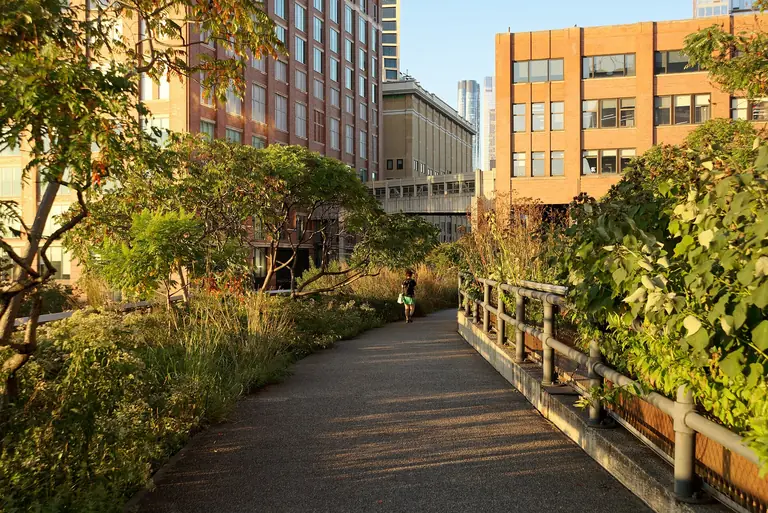
The Dutchman Piet Oudolf (b. 1944) changed the very approach to plants. His “new perennial wave” (English New Perennial) gardens are beautiful not so much for their short-lived flowers as for their form, texture and seed heads, which remain even in winter. His best-known works—the “High Line” park in New York, built on old railway viaducts, Chicago’s “Lurie Garden” and the “Hauser & Wirth” garden in England—inspired gardeners around the world to plant more naturally.
Sigita Rudaminienė · Lithuania
Today, Lithuanian specialists are also creating a distinctive and increasingly recognisable direction in landscape design. One of the most prominent creators of the new generation is Sigita Rudaminienė, founder of the “Žydinti erdvė” landscape design studio.
Her work combines aesthetic plant compositions with a clear spatial structure, functionality and respect for the natural environment. Her ability to see not only individual plants but also the entire landscape as it changes over time means that Sigita Rudaminienė can be considered one of Lithuania’s best and most promising contemporary landscape designers.
Sigita’s projects, plant compositions and practical garden ideas can be found on “Žydinti erdvė’s” “Instagram” account and website.
And what can we take from this?
The stories of these masters remind us of a simple truth: a good space is not an accident. The same principle applies both to town squares in Lithuanian cities and to a small garden by the home—well-considered greenery changes not only the view but also how we feel. Behind every harmonious space lies the creator’s ability to balance aesthetics, function and nature’s rhythm. Perhaps the next time you walk through a park or plan your own garden, you will see them with slightly different eyes.
Photo: the Generalife gardens, Granada (Spain)—among the most influential Moorish gardens in Europe. Wikimedia Commons (CC0).


Comments