By AtheneNet History Desk
William of Normandy landed at Pevensey in East Sussex on the morning of 28 September 1066. The landing gave his invading army a foothold in England while King Harold Godwinson was dealing with the aftermath of a battle in the north. It began the final stage of a campaign that led to the Battle of Hastings on 14 October. The landing and the battle were separate events, more than two weeks apart.
Pevensey was a landing point, not the battlefield
Pevensey’s place in the story begins at the coast. English Heritage dates the arrival of William’s fleet there to the morning of 28 September. For an army arriving by sea, reaching land was the first essential step: people, horses and equipment had to come ashore before William could establish a position and move inland.
That makes Pevensey consequential even though no Battle of Hastings was fought there. It was where the invasion became a presence on English soil. The later battle took place near the place now called Battle, in East Sussex, rather than at the landing site.
The distinction helps make sense of the familiar name “Battle of Hastings.” Hastings identifies the battle in history, but it should not turn every event in William’s September and October campaign into a single moment or place. Pevensey marks the arrival; 14 October marks the decisive encounter between William’s and Harold’s forces.
The coastline William encountered has changed
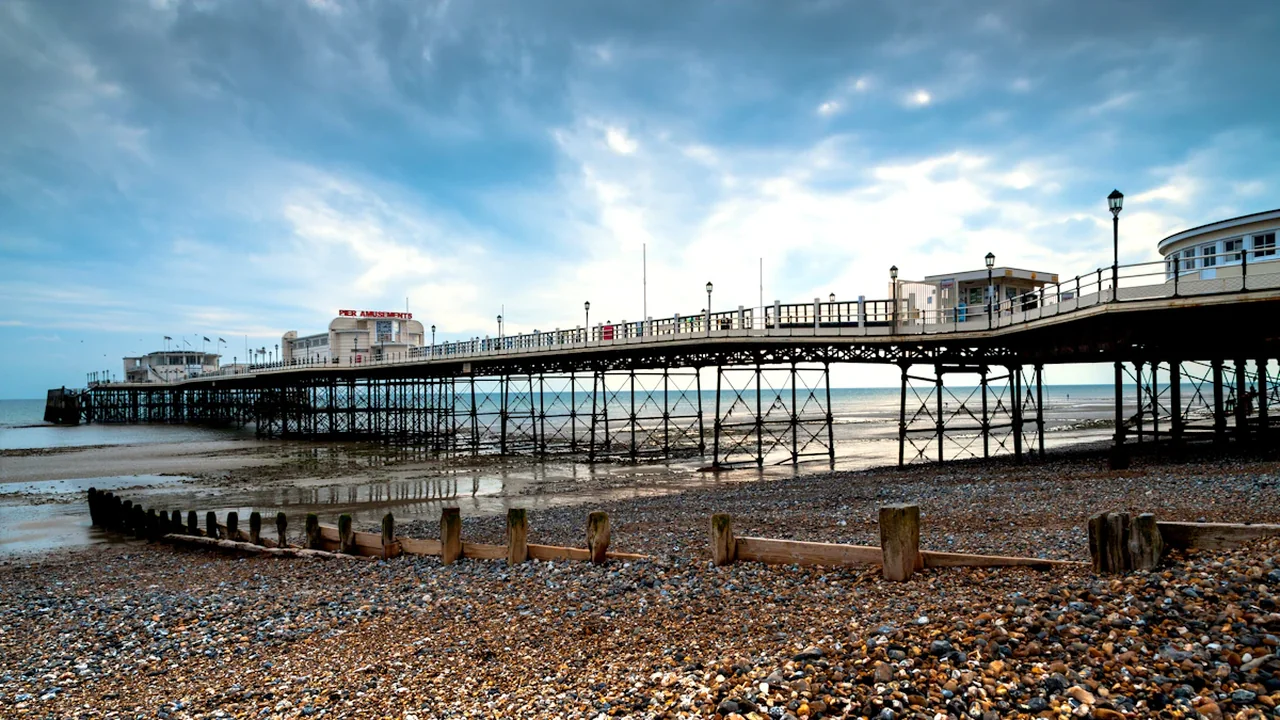
A modern view of Pevensey cannot be read as a precise map of the shore in 1066. English Heritage notes that the coastline has changed substantially since William landed. Land that appears set back from the sea today therefore gives a misleading impression of how an arriving fleet would have encountered the area.

This is why the physical landscape matters to the story. A visitor looking across the present-day surroundings may reasonably wonder why an invasion fleet chose this spot. The answer starts with remembering that the relationship between Pevensey and the water was different in William’s time. The location made sense as a point of arrival on the coast as it then existed.
The changed shoreline also places a limit on what the present landscape alone can show. It can help readers locate Pevensey and consider the route from sea to land, but it cannot recreate the exact view from the ships or identify an individual vessel’s path. English Heritage’s history of the Norman invasion provides the date and setting for the landing; the modern terrain needs to be understood alongside that history.
Three days after Stamford Bridge, another threat arrived
The timing made the landing especially important. Harold Godwinson had defeated Harald Hardrada at the Battle of Stamford Bridge on 25 September 1066, three days before William reached Pevensey. That victory dealt with one invasion, but it did not end the struggle for the English throne.
William’s arrival presented Harold with a new threat in a different part of the country. The sequence was compressed: victory at Stamford Bridge, William’s landing at Pevensey, then the Battle of Hastings on 14 October. English Heritage’s account of the battlefield places Hastings after both Harold’s northern victory and William’s arrival.
These dates explain why Pevensey belongs in more than a story about where ships came ashore. William had established a position in southern England while Harold faced the need to respond after fighting in the north. The landing did not decide the outcome by itself, but it made the later confrontation possible.
It is also worth keeping the intervals clear. Stamford Bridge and Pevensey were three days apart. Pevensey and Hastings were sixteen days apart. William’s force did not land and fight the Battle of Hastings on the same day. Between arrival and battle lay the practical work of sustaining an invading army and the movement of two opposing forces toward a confrontation.
Why Pevensey still matters to the story of 1066
Pevensey shows how geography and timing shaped the Norman invasion. William needed a place to bring his fleet ashore. Harold had just won a major battle elsewhere. The coastline that framed William’s arrival has since changed, making the significance of the site less obvious from a present-day view.
Keeping those facts together gives Pevensey its proper place in the story. It was the point of entry for William’s force on 28 September, not the location of the battle that followed. The Battle of Hastings on 14 October was a later event, fought after Harold turned to face the threat in the south.
For anyone tracing the events on a map or visiting the area, the two English Heritage histories offer useful points of reference: the Norman invasion at Pevensey for the landing and changed coast, and the history of the Battle of Hastings for the confrontation that followed.
Source: English Heritage
Context & actions About this article
Source check Historical context
English Heritage dates the Pevensey landing to 28 September 1066 and the Battle of Hastings to 14 October.
- Pevensey is identified as William’s landing point.
- The coastline at Pevensey has changed substantially since 1066.
- The landing and the Battle of Hastings are treated as separate events.
- Source
- English Heritage: The Norman invasion
- Scope
- East Sussex, England
- Updated
- 2026-09-28 09:25
Source check
Report a trust issue
Send a clear signal to community moderation if the source, facts or context need review.


Comments