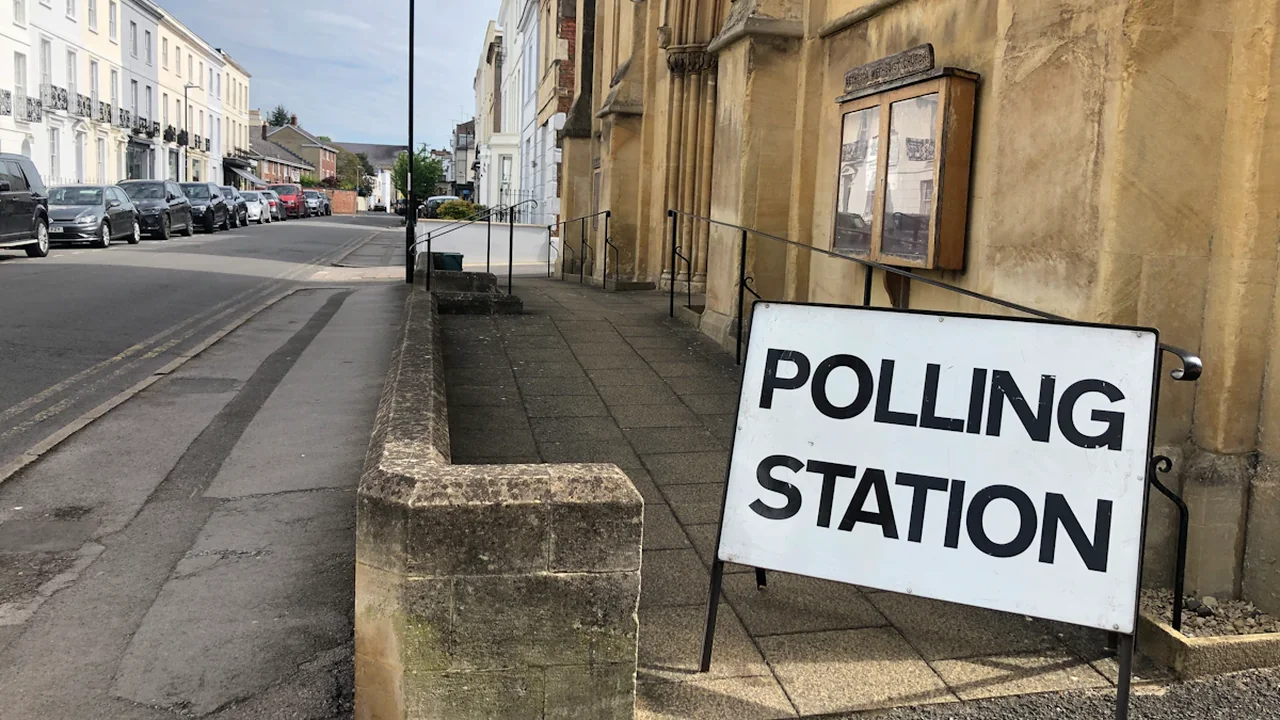
By AtheneNet Politics Desk | 9 September 2026
The United Kingdom can legally hold another general election before the end of 2027, but the existence of that power does not mean an early contest has been confirmed. The Dissolution and Calling of Parliament Act 2022 restored the route through which the Prime Minister may request an early dissolution. For this forecast, however, only an official polling day held by 31 December 2027 produces a YES result.
That distinction matters beyond Westminster. UK election timing could alter the timetable for decisions on taxation, public-service budgets, employment law and household support. Until formal electoral steps occur, claims about an imminent contest remain political speculation rather than proof of a qualifying event.
The forecast in five lines
- Question: Will a UK general-election polling day occur by the end of 2027?
- Deadline: 23:59 on 31 December 2027.
- YES: An official general-election polling day occurs anywhere in the United Kingdom by the deadline.
- NO: No qualifying polling day has occurred when the deadline passes.
- Final check: The official election date and public electoral record, including Electoral Commission information, settle the result.
An announcement made during 2027 for an election in 2028 would not be enough. By-elections, local elections, devolved elections and referendums are also outside the forecast.
Why an election before 2028 is legally possible
The previous UK general election took place on 4 July 2024. A Parliament may continue toward its maximum legal term, so another general election is not automatically required during 2027. That later statutory backstop is important to the NO case.
An earlier election is nevertheless possible under the constitutional and statutory arrangements restored by the Dissolution and Calling of Parliament Act 2022. The Act repealed the fixed-term system and revived the framework under which the Prime Minister can request that the Sovereign dissolve Parliament.
The House of Commons Library explains both this early-dissolution route and the maximum-term rules governing the next election. The two mechanisms should not be confused: one permits an election to be called earlier, while the other prevents a Parliament from continuing indefinitely.
There is therefore no legal contradiction between saying that an election could happen by 2027 and saying that it does not have to happen by then. The unresolved issue is whether the early route will actually be used in time to produce a polling day before the forecast closes.
Political pressure is not the same as an election date
Election speculation can intensify after poor opinion polls, parliamentary defeats, leadership disputes, economic setbacks or changes in governing strategy. Such developments may affect the perceived likelihood of an early contest, but none independently establishes an official polling day.
Signals that may change expectations
Readers assessing the possibility of an early election may reasonably monitor:
- public statements by the Prime Minister about election timing;
- changes in the government’s parliamentary position;
- accelerated policy announcements or fiscal decisions;
- candidate selection and campaign preparations by political parties;
- reports that an early dissolution is being considered.
These are political signals. They may support an argument about likelihood, but they cannot resolve the forecast.
Formal developments carry more weight
A confirmed move toward an election would involve official constitutional and electoral steps, including dissolution, a proclamation and the publication of a polling date. Public notices from government and electoral authorities would provide stronger evidence than anonymous briefings, campaign activity or newspaper speculation.
Even an official announcement must be read carefully. If a general election were announced on 20 December 2027 but scheduled for January 2028, the forecast would still resolve NO because the polling day itself would fall after the deadline.
The YES path requires polling by the deadline
A YES outcome has a clear sequence. The Prime Minister would need to pursue an early dissolution in sufficient time for the formal election timetable to run, and the resulting official polling day would need to occur no later than 31 December 2027.
The critical event is not the request, the dissolution or the start of campaigning in isolation. Those developments could make YES increasingly likely, but the resolution condition is completed only when the official UK general-election polling day occurs within the permitted period.
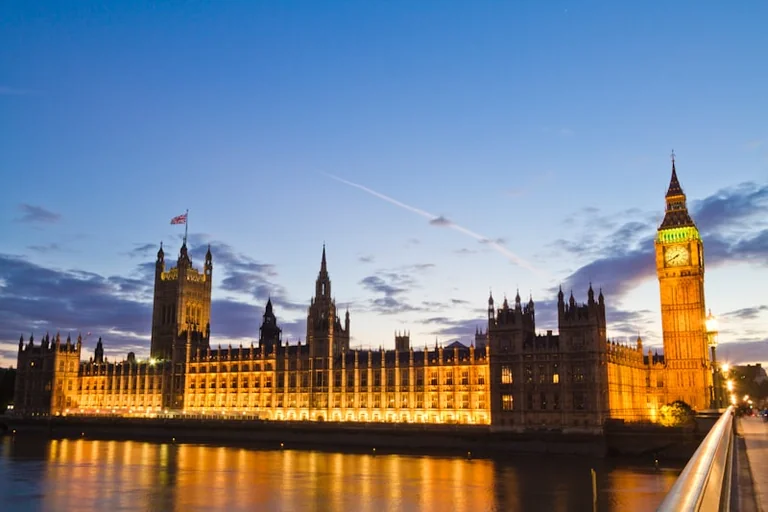
A qualifying election would be one for the House of Commons across the United Kingdom. The forecast does not require a particular party to win, a change of government or any minimum turnout. It concerns timing alone.
The following events would not produce YES:
- a parliamentary by-election in one constituency;
- an election to the Scottish Parliament, Senedd or Northern Ireland Assembly;
- council, mayoral or other local elections;
- a referendum;
- publication of an election date falling in 2028 or later.
This narrow definition prevents unrelated electoral activity from being mistaken for the forecasted event.
The NO path leaves the election until after 2027
NO resolves if 23:59 on 31 December 2027 passes without a qualifying general-election polling day. Parliament could continue under the maximum-term framework, or an early election could be considered but never formally called.
NO would also be the result if dissolution occurred too late for polling to take place before the deadline. The same applies if the government announced during 2027 that voters would go to the polls in 2028. In both cases, political certainty about a future election would exist, but the forecast’s time condition would remain unmet.
This makes the date of polling more important than the date of the announcement. It also means the forecast can remain unresolved through months of intense political preparation if no qualifying vote has yet occurred.
Election timing could shape decisions affecting households
An early election can influence when major policies are announced, legislated for or implemented. It does not guarantee any particular policy outcome, but it may compress parliamentary time and encourage parties to clarify competing plans sooner.
Tax decisions are one area to watch. Governments may bring forward, postpone or reframe fiscal measures as an election approaches, while opposition parties may publish alternative plans. Households should distinguish campaign proposals from measures enacted through legislation or confirmed in an official fiscal statement.
Public services could also become central to an early campaign. Funding for the NHS, schools, councils, transport and social care often depends on multi-year spending decisions. Election timing may affect when those settlements are presented, although essential services continue during a campaign.
Employment rules may face a similar divide between proposals and law. Commitments involving worker protections, employer obligations, pay or enforcement do not take effect merely because they appear in a manifesto. They require the relevant legal and administrative process after the election.
For household finances, the practical lesson is to avoid making irreversible decisions solely on election speculation. Tax allowances, benefit entitlements, energy support and employment rights should be checked against current government guidance until a new measure has formally taken effect.
The official polling record will settle the result
The National Archives publishes the enacted text of the Dissolution and Calling of Parliament Act 2022, while the House of Commons Library provides parliamentary research on dissolution and the legal timetable for the next general election. The Electoral Commission publishes official public information about voting and electoral events.
Together, these sources clarify the difference between legal possibility and an event that has actually occurred. The Act establishes the framework, the Commons Library explains its operation, and official electoral information identifies the relevant vote.
The decisive next development would be an official polling date that falls on or before 31 December 2027. Until that happens and polling occurs, the outcome remains open: the legal route supports YES, while the later maximum-term backstop leaves a credible NO path.
Source: House of Commons Library
Context & actions About this article
Source check How the forecast is resolved
The outcome depends on whether an official UK general-election polling day occurs by the stated deadline.
- Confirm that the event is a UK general election for the House of Commons.
- Verify the official polling date through public electoral information.
- Check that polling occurred by 23:59 on 31 December 2027.
- Exclude announcements for 2028, by-elections, devolved elections, local elections and refe...
- Source
- Dissolution and Calling of Parliament Act 2022
- Scope
- United Kingdom
- Updated
- 2026-09-09 14:54
Source check
Report a trust issue
Send a clear signal to community moderation if the source, facts or context need review.



Comments