
By the AtheneNet Economy Desk | 7 September 2026
The Bank of England’s year-end rate-cut window is now under way, with decisions effective from 3 September to 31 December 2026 determining the outcome. The Bank confirms that its Monetary Policy Committee sets Bank Rate and publishes each decision. A reduction during this period would matter directly to UK mortgage borrowers, savers, landlords and businesses, although the effect on individual finances would depend on how banks and other lenders respond.
The decision at a glance
- Question — Will the Bank of England cut Bank Rate before the end of 2026?
- Deadline — 31 December 2026.
- YES — The official history records at least one reduction from the immediately preceding published rate during the covered period.
- NO — The history records no reduction between 3 September and the deadline.
- Final reference — The Bank of England’s decision pages and dated Bank Rate database.
This is a binary forecast about an official policy decision, not a claim that lower rates are certain. An increase followed by a reduction would still produce a YES result because the test is whether any qualifying decrease occurs before the deadline.
Why a Bank Rate cut would affect household finances
Bank Rate is the policy rate set by the Monetary Policy Committee. It influences financing conditions across the economy, but changes do not pass through to every household or business at the same speed or by the same amount.
Mortgage borrowers on tracker products may see a relatively direct change if their contract moves with Bank Rate. Borrowers on fixed-rate deals would generally not receive an immediate contractual reduction, but future remortgage offers could reflect changes in policy expectations, wholesale funding costs, competition and lender risk assessments.
Landlords face many of the same financing pressures. A lower policy rate could ease some borrowing costs over time, particularly when loans are repriced, but tax, maintenance, insurance and regulatory expenses would remain separate considerations. Tenants should not assume that a rate reduction would automatically produce lower rents.
Savers could experience the opposite effect. Banks and building societies may reduce some variable savings rates after a policy cut, although providers set their own products and may compete differently for deposits. Fixed-term accounts already opened usually retain their agreed rate until maturity, subject to their terms.
For UK businesses, lower Bank Rate can support cheaper financing and improve cash-flow conditions, but the benefit is neither universal nor immediate. Loan structure, credit quality, lender margins and the broader economic outlook all influence the rate ultimately offered to a company.
Inflation, wages and activity will shape the MPC debate
The Monetary Policy Committee considers a broad range of evidence when setting Bank Rate. No single inflation release, wage figure or activity measure guarantees a particular decision, and members can interpret the same data differently.
Inflation can strengthen either side of the case
Evidence that inflationary pressure is easing sustainably could make a reduction easier to justify. Policymakers may examine headline inflation alongside services prices, underlying measures and signs of how broadly price pressures are spreading.
A weak monthly figure alone may not be decisive. Inflation can be affected by volatile components or temporary changes, while the Committee must judge whether price growth is likely to remain consistent with its objective over time. Persistent domestic inflation could support waiting, even if some headline measures improve.
Wage growth and demand reveal different risks
Wage growth matters because labour costs can influence prices, especially in service industries. A gradual cooling in pay growth could support the argument that domestic inflation pressure is becoming less persistent. Strong wage growth, however, would not automatically rule out a cut if other evidence pointed to weakening demand or improving productivity.
Economic activity adds another layer. Slower output, softer consumer spending, weaker hiring or deteriorating business surveys could increase concern that restrictive monetary conditions are weighing heavily on the economy. More resilient growth could give the Committee additional time to assess inflation before changing Bank Rate.
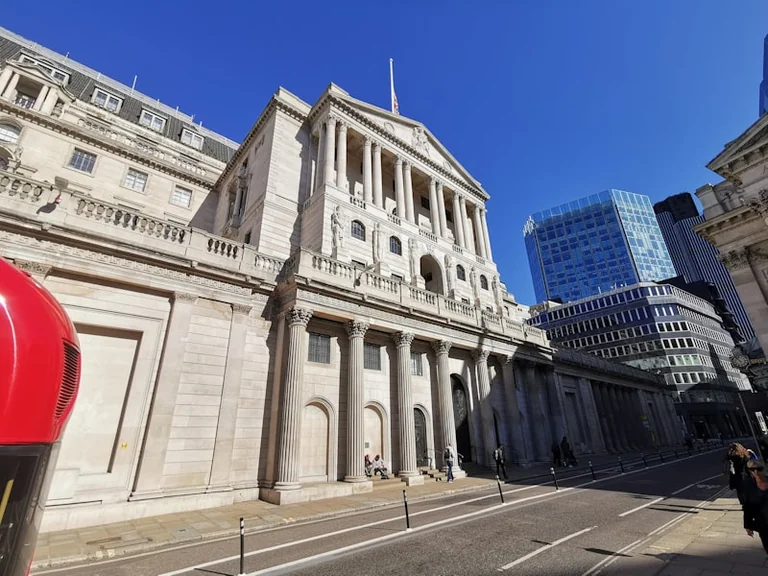
The MPC must combine these signals rather than follow a mechanical trigger. The relevant question is how the full evidence changes the expected path of inflation and the balance of risks facing the UK economy.
The evidence that would support YES or NO
A YES outcome would become more plausible if several indicators moved in a direction consistent with lower inflation persistence and weaker demand. That could include moderating services inflation, slower wage growth, reduced labour-market tightness or subdued economic activity. Policymakers would still need to decide that a lower rate was appropriate at a scheduled or otherwise published meeting.
The NO path remains viable if inflation pressures prove persistent, wage growth stays stronger than policymakers consider compatible with lasting price stability, or activity remains sufficiently resilient. External price shocks or renewed concerns about inflation expectations could also encourage the Committee to keep Bank Rate unchanged or raise it.
There is an important distinction between market expectations and the official decision. Economists, financial markets and lenders may adjust their forecasts before an MPC announcement, but those changes cannot settle this question. Only a reduction recorded by the Bank of England within the specified period counts.
Voting details and accompanying explanations can still help readers understand the direction of the debate. A divided vote may show disagreement about timing, while the policy statement can reveal how the Committee assesses inflation persistence and economic slack. Neither constitutes a qualifying cut unless the published Bank Rate itself is lower.
How the forecast will be settled
The test compares every Bank Rate entry dated from 3 September through 31 December 2026, inclusive, with the immediately preceding published rate. If at least one entry is lower, the forecast resolves YES. If none is lower by the end of the deadline, it resolves NO.
The direction of earlier or intervening decisions does not alter that test. For example, if the MPC first raises Bank Rate and later reduces it before the deadline, the later decrease is enough for YES. The final rate does not have to finish below the level recorded at the start of the period.
Announcements, speeches, meeting votes, press coverage and analyst forecasts do not independently decide the result. The Bank of England’s interest-rate decision pages and its official dated Bank Rate history are the exclusive references. If other sources describe the decision differently, the Bank’s own published record governs the outcome.
This approach avoids ambiguity about whether a change was expected, temporary or economically significant. The forecast asks only whether an official reduction relative to the immediately preceding published rate appears during the defined window.
What borrowers and savers should monitor next
Readers can follow the Bank of England’s published interest-rate decisions and then verify any change against the dated Bank Rate database. Inflation, wage and activity releases provide useful context, but the MPC announcement is the point at which policy changes become official.
Households approaching a mortgage refinancing date may benefit from comparing product terms rather than assuming all borrowing rates will follow Bank Rate immediately. Savers can similarly check whether an account is fixed or variable and review notice periods, withdrawal restrictions and deposit protection before making decisions.
The decisive development would be a Bank of England entry dated no later than 31 December 2026 showing Bank Rate below the immediately preceding published level. Until such an entry appears—or the deadline passes without one—the outcome remains uncertain.
Source: Bank of England
Context & actions About this article
Source check How the forecast is verified
The result depends exclusively on whether the Bank of England records a qualifying Bank Rate reduction during the stated period.
- Check each official Bank Rate entry dated from 3 September through 31 December 2026.
- Compare every entry with the immediately preceding published rate.
- Resolve YES after any recorded reduction, including one following an increase.
- Resolve NO if the deadline passes without a recorded reduction.
- Source
- Bank of England Bank Rate decisions
- Scope
- United Kingdom
- Updated
- 2026-09-07 14:00
Source check
Report a trust issue
Send a clear signal to community moderation if the source, facts or context need review.


Comments