
A pump that is 5p per litre above another forecourt costs £2.50 more on a 50-litre fill. That comparison is useful, but judging whether a UK petrol or diesel price is fair also requires the newest dated national benchmark, the type of forecourt and the cost of driving elsewhere.
Start with the newest dated UK weekly average
The Department for Energy Security and Net Zero publishes weekly UK average pump prices for petrol and diesel. Open its weekly road fuel prices page and use the most recent dated entry available when you make the comparison.
No current pence-per-litre figure should be copied without checking that entry’s publication or week-ending date. Fuel prices move, so an older average can make today’s forecourt look artificially cheap or expensive.
Record three details:
- The local price displayed in pence per litre.
- The matching UK average for petrol or diesel.
- The date covered by the official figure.
Compare like with like. Unleaded petrol should be measured against the petrol average, while diesel should be measured against the diesel average. Premium grades are not directly comparable with standard-fuel benchmarks.
RAC Fuel Watch provides additional context on pump-price movements and the factors affecting retailers. It can help explain the direction of prices, but the price on the forecourt sign remains the amount relevant to your fill-up.
Calculate the effect on your tank, not just each litre
Subtract the cheaper price from the higher price, convert the difference from pence to pounds, and multiply it by the number of litres you expect to buy.
Tank cost difference = litres bought × price difference in pounds
For example, a 5p-per-litre difference is £0.05 per litre. On 50 litres, the calculation is 50 × £0.05, producing a saving or extra cost of £2.50.
| Price difference | Effect on 50 litres |
|---|---|
| 1p per litre | £0.50 |
| 3p per litre | £1.50 |
| 5p per litre | £2.50 |
| 10p per litre | £5.00 |
Use the amount you will actually add rather than the vehicle’s advertised tank capacity if you are only topping up. A 5p gap saves £1 on a 20-litre purchase, not £2.50.
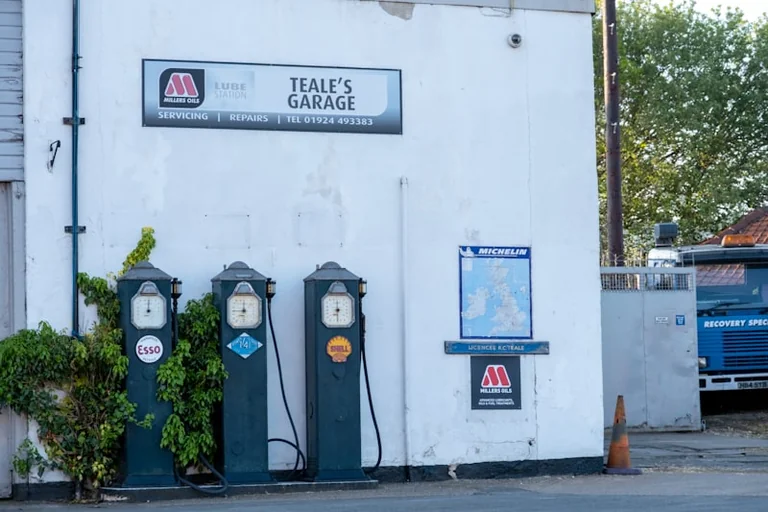
National averages do not set one fair price everywhere
The UK average is a benchmark, not a rule that every retailer should match. It combines many locations and can conceal regional differences in competition, transport costs and local pricing.
Motorway service areas often charge a premium because they operate in high-cost locations and sell convenience to drivers already travelling. A motorway price above the national average is therefore not automatically evidence that an ordinary local forecourt is unusually expensive.
Rural motorists may have fewer nearby retailers, reducing local competition. A supermarket cluster or several competing stations in a town can produce lower prices than the national figure. Prices can also differ between neighbouring districts, so a nearby non-motorway comparison is often more informative than the UK average alone.
A sensible check uses both measures: compare the pump with the newest UK average, then compare it with two or three accessible forecourts serving a similar area.
A cheaper pump can cost more after a detour
A long diversion can erase a modest headline saving. First calculate the maximum saving on the planned fill. Then estimate the fuel consumed on the extra round trip and multiply those litres by the relevant pump price.
Suppose a cheaper station would save £2.50 on the fill. If reaching it and returning consumes £2 of fuel, the net saving is only 50p. The journey also adds time and mileage, which the fuel calculation does not capture.
For a realistic decision:
- Measure only the additional distance, not the journey you were already making.
- Estimate extra fuel use from the vehicle’s normal real-world economy.
- Price that fuel at the rate you are likely to pay.
- Subtract the detour cost from the full-tank saving.
A small price gap is most valuable when the cheaper forecourt is already on the route. Before filling up, check the date of the official weekly average and confirm that the displayed local price has not changed.
Source: Department for Energy Security and Net Zero
Context & actions About this article
Source check How the comparison works
The method uses the latest dated government weekly average as a benchmark and does not present an unverified current pump price.
- Match petrol with the petrol average and diesel with the diesel average.
- Check the publication or week-ending date before using a national figure.
- Compare similar nearby forecourts as well as the UK average.
- Subtract additional journey fuel costs from any expected saving.
- Source
- Department for Energy Security and Net Zero
- Scope
- United Kingdom
- Updated
- 2026-08-14 17:47
Source check
Report a trust issue
Send a clear signal to community moderation if the source, facts or context need review.




Comments