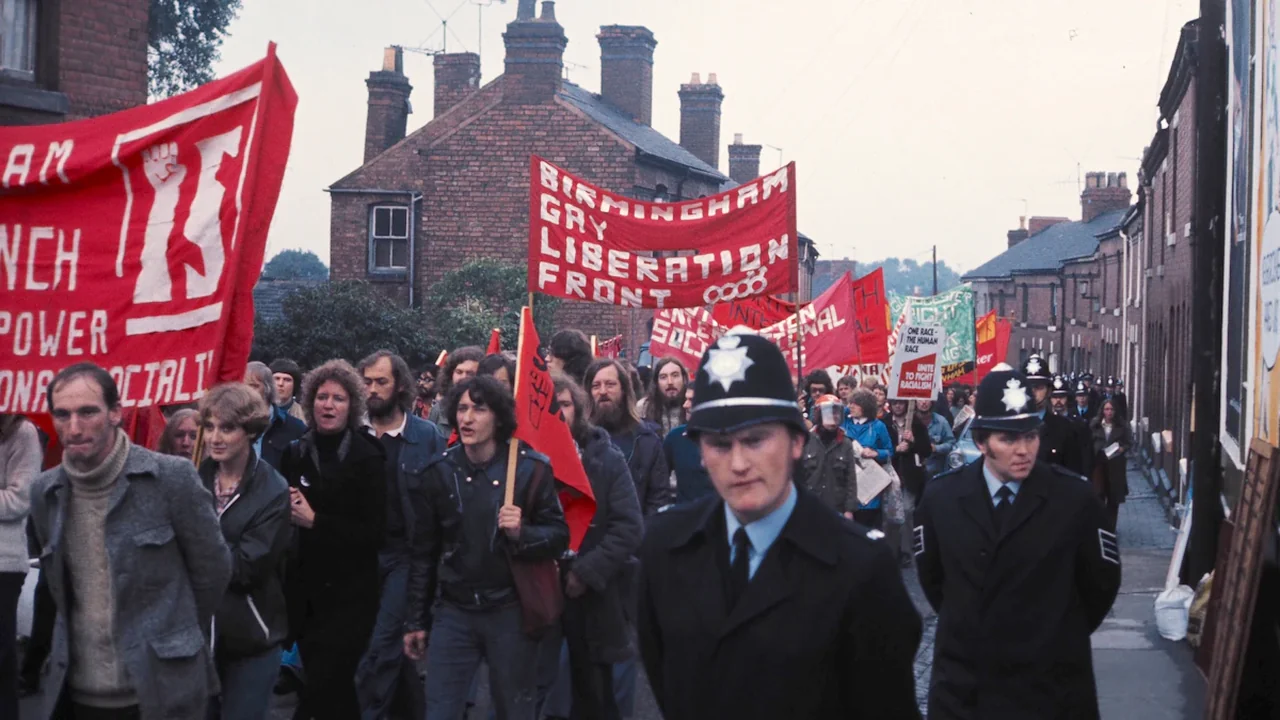
On 5 October 1936, around 200 men set out from Jarrow to walk to London with a petition asking for work. Ninety years later, the Jarrow Crusade remains a reference point in arguments about unemployment and regional inequality. Its lasting importance lies in the demand it made visible; the march itself did not bring an immediate solution to the town’s job crisis.
Why Jarrow’s loss of work led to a march
Jarrow, on the River Tyne in north-east England, had depended heavily on shipbuilding and related industry. The closure of Palmer’s shipyard in 1934 deepened a long employment crisis. When a major employer disappears from a town with few alternatives, the damage reaches beyond its former workforce: local shops, households and other businesses lose income too.
The march took place during the Great Depression, but Jarrow’s circumstances were also shaped by its particular dependence on heavy industry. That is why the town matters to the story. The men were not setting out from an abstract example of unemployment. They came from a place where the loss of industrial work had left many residents with little prospect of finding another job nearby. Accounts of the closure and the march are set out in Encyclopaedia Britannica’s history of the Jarrow March.
Jarrow’s Labour MP, Ellen Wilkinson, became closely associated with the campaign. She helped bring the town’s case to a national audience, while the marchers carried it on foot. Their journey of roughly 300 miles took several weeks and drew attention along the route. Public attention, however, was a means of pressing their demand, not the demand itself.
What the marchers asked Parliament to do
The marchers wanted the government to help restore employment in Jarrow. They carried a petition signed by thousands of townspeople and intended it for Parliament. Their case was about the need for work in their own town, rather than a claim that a long walk could, by itself, create jobs.
The name “Crusade” became attached to the march, but its immediate purpose was practical. Residents wanted a future in which people could earn a living without leaving Jarrow. Proposals for new industry formed part of the wider campaign around the town. The petition put the employment problem before the House of Commons, where Wilkinson presented Jarrow’s case in November 1936; the proceedings can be traced through Hansard’s parliamentary records.
That distinction between asking and achieving matters. The petition was received as a parliamentary petition, but the government did not respond with an immediate programme that replaced Jarrow’s lost jobs. Nor did the march itself reopen the shipyard. Describing the journey as a success without saying what kind of success risks obscuring the demand the marchers had made.
Why the journey became a national symbol
The Jarrow Crusade gave one town’s employment crisis a form that people across Britain could see. A petition can be read in Parliament; a group of unemployed men walking from the Tyne to London also makes the distance between a struggling industrial community and national decision-makers visible.
It is one of the best-known protests against unemployment in Britain, though it was not the only one. Its place in public memory owes much to the combination of a clearly identified town, a defined demand and a journey with a destination. Wilkinson’s advocacy also helped keep Jarrow’s circumstances in view after the walkers reached London.
Over time, the march became shorthand in debates about areas losing major employers while new opportunities grow elsewhere. That use is understandable, but it can flatten the history. Jarrow’s people were responding to the specific collapse of work in their town. They sought government action because they saw too few local alternatives, not because they expected public sympathy alone to replace an industrial economy.
What the 90th anniversary can and cannot tell us
The anniversary on 5 October 2026 marks the start of the walk, not the date on which Jarrow’s unemployment was resolved. The march helped make the town’s plight widely known and left a powerful image of a community asking for work. Those are substantial outcomes, but they are different from a measurable gain in local jobs immediately caused by the journey.
The distinction also helps explain why Jarrow is still cited. When an employer closes or a region loses an industry, the question raised by the march returns: what happens to people whose skills and homes are tied to a place where work has vanished? Invoking Jarrow can draw attention to that question. Answering it requires looking at the jobs, investment and choices available to the affected community.
Readers looking back at the Crusade can follow both parts of its history: the marchers’ petition and its parliamentary reception, and the longer story of employment in Jarrow after 1936. Together, they show why the walk endured as a symbol while keeping its immediate achievements in proportion.
Source: Editorial research
Context & actions About this article
Source check Historical sources
The account distinguishes the marchers’ request for work from the government’s immediate response and the march’s later reputation.
- Check the 1936 Jarrow petition and its presentation in Hansard.
- Compare the dates and route with Encyclopaedia Britannica’s account.
- Keep the march’s public impact separate from claims about jobs created.
- Source
- Hansard parliamentary records
- Scope
- Jarrow, England
- Updated
- 2026-10-05 09:39
Source check
Report a trust issue
Send a clear signal to community moderation if the source, facts or context need review.

Comments