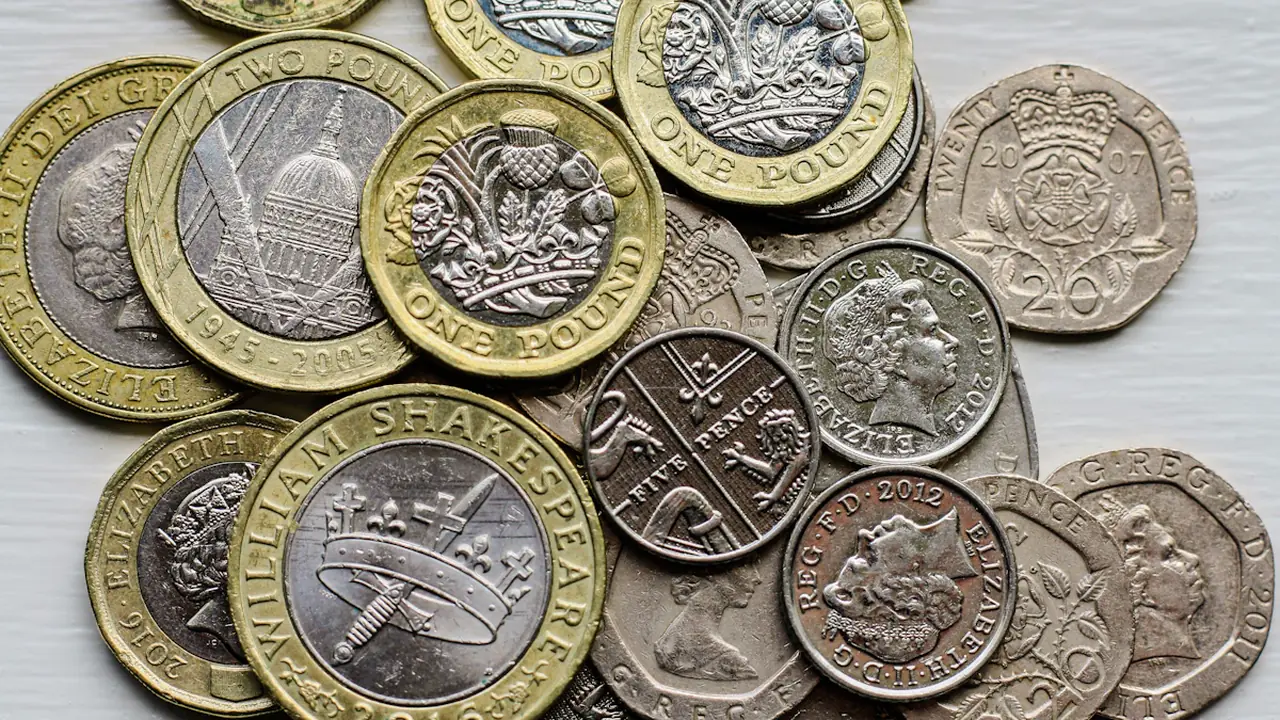
The Office for National Statistics is scheduled to publish the United Kingdom’s July 2026 inflation figures on 19 August 2026, creating a clear test for household costs: will the headline Consumer Prices Index 12-month rate be 3.0% or lower? The result will show how quickly consumer prices have risen over the year to July and may influence household budgeting, wage comparisons, savings decisions and expectations for interest rates.
By the AtheneNet Economics Desk · 14 August 2026
The decision in one view
Read also: Is Your Local UK Fuel Price Fair? A Full-Tank Test
- Question: Is the July 2026 headline CPI 12-month rate 3.0% or lower?
- Deadline: The decision awaits the ONS release scheduled for 19 August.
- YES: The published rate is 3.0% or below.
- NO: The published rate is above 3.0%.
- Deciding source: The official ONS Consumer Price Inflation bulletin for July 2026.
The 3.0% test applies to the annual headline CPI rate
The comparison is between one official number and one fixed threshold. The relevant number is the headline CPI 12-month rate for July 2026, expressed as a percentage. It measures the change in the overall CPI between July 2025 and July 2026.
This is not a prediction about whether prices fell during July. Inflation can slow while the general price level continues to rise. A headline rate of 3.0%, for example, would mean the measured basket cost 3.0% more than a year earlier, even if some individual prices declined.
The threshold includes equality. A published figure of exactly 3.0% counts as YES, as would 2.9% or any lower rate. A result of 3.1% or more counts as NO. Market sentiment, analyst estimates and unofficial calculations cannot decide the result.
The ONS release page schedules the July bulletin for 19 August 2026. Until that bulletin supplies the headline rate, the outcome remains uncertain.
What CPI measures in everyday household spending
The Consumer Prices Index tracks how the prices of a representative basket of goods and services change over time. The basket covers spending categories encountered across the economy, rather than the exact purchases of any one family.
ONS price collectors and administrative data provide price observations, while expenditure weights determine how strongly different categories affect the index. Those weights are intended to reflect broad consumer spending patterns. A category with a larger share of typical expenditure generally has more influence than a small category experiencing the same price movement.
That makes CPI useful as a national measure but not a personal cost-of-living calculator. Two households can experience different pressures because they buy different products, use different amounts of energy, have different housing arrangements or face different transport and childcare costs.
A lower annual CPI rate also does not mean all bills have become cheaper. It means the overall basket is increasing more slowly than before, or has moved lower relative to the same month a year earlier. Individual categories may still be rising rapidly.

CPI, CPIH and core inflation answer different questions
The July bulletin is likely to contain several prominent inflation measures. Only one resolves this forecast: the headline CPI 12-month rate.
CPIH is a broader measure that includes owner-occupiers’ housing costs, along with council tax. Those housing costs are important for understanding household expenses, but a CPIH figure at or below 3.0% would not produce a YES result if headline CPI were above the threshold.
Core inflation is designed to show underlying price pressure by excluding volatile categories, commonly energy, food, alcohol and tobacco. It can help readers judge whether inflation is becoming persistent across services and other areas. It does not resolve the question either.
The Retail Prices Index may also appear in inflation coverage, but it uses a different methodology and population coverage. The ONS consumer price inflation methodology describes the distinctions among CPI, CPIH and RPI.
These measures can move in different directions in the same month. Readers should therefore check the exact label beside the published percentage rather than treating every inflation number as interchangeable.
Food, energy and services could shape the July result
The final rate will reflect movements across many components and how July 2026 prices compare with July 2025. The annual comparison creates base effects: an unusually large rise or fall a year earlier can affect the latest 12-month rate even when current monthly changes are modest.
Food prices matter directly to frequent household purchases. Broad increases across groceries can be particularly visible because shoppers encounter them repeatedly, but the contribution to headline CPI depends on both the size of the price change and food’s weight in the basket.
Energy can have an outsized effect when electricity, gas or motor-fuel prices move sharply. Its contribution may change quickly, although a household’s actual experience depends on consumption, tariff timing, vehicle use and payment arrangements.
Housing-related costs require careful interpretation. Rent and household services can affect CPI, while the owner-occupiers’ housing-cost component belongs to CPIH rather than headline CPI. Mortgage interest payments are not simply represented as a direct component of headline CPI.
Services inflation is another important signal because it covers labour-intensive areas such as hospitality, recreation, communication and personal services. A firm services reading could keep the headline rate above the threshold even if some goods or energy prices weaken. Conversely, softer services growth combined with favourable food or energy movements could support a result of 3.0% or below.
A component comparison should be made only after the ONS publishes the bulletin. Before then, inserting estimated food, energy, housing-related or services figures beside the official threshold would risk presenting forecasts as observed data.
Why the result matters for household finances
Inflation affects the purchasing power of income. If annual pay grows faster than CPI, a worker’s real purchasing power may improve on this broad measure. If wages grow more slowly, income buys less than it did a year earlier. Personal circumstances, taxes and spending patterns can still produce a different outcome.
Benefits and pensions can also be linked to inflation measurements through rules set for particular schemes. A single July CPI figure does not automatically determine every future payment because uprating may use another reference month, another index or additional policy conditions.
For savers, the useful comparison is between the return on an account and inflation after allowing for tax and access conditions. A lower CPI rate can reduce the pace at which cash loses purchasing power, but it does not guarantee that a savings product delivers a positive real return.
The release may also influence expectations for interest rates. Persistent inflation can strengthen the case for tighter monetary policy, while sustained easing may support expectations of lower rates. One monthly bulletin is only part of that assessment, so the July result should not be treated as a promise of any particular rate decision.
Borrowers may therefore see market expectations move without receiving an immediate change to their mortgage, loan or credit-card rate. Fixed-rate customers and people refinancing at different dates can experience the same inflation news very differently.
The evidence supports both a YES and a NO outcome
A YES result could emerge if price growth across the basket moderates enough to bring the annual headline rate to 3.0% or below. Softer goods, food or energy contributions could help, while easing services inflation would make that path broader and potentially more durable.
A NO result would follow if the headline rate remains above 3.0%. That could happen if services stay firm, food prices accelerate, energy creates an unfavourable contribution or several smaller increases combine across the basket.
Neither path can be established from the release calendar. The calendar confirms when the evidence is expected, not what the evidence will show. The annual rate will also depend on unrounded index calculations and component weights, making confident conclusions from a few visible prices unreliable.
How the official result will settle the forecast
The outcome will be read from the first official ONS publication of the July 2026 CPI 12-month rate:
- YES if headline CPI is reported as 3.0% or less.
- NO if headline CPI is reported above 3.0%.
- CPIH, core CPI and RPI cannot substitute for the headline CPI result.
- If publication is delayed, the forecast remains unresolved until the first official release appears.
After publication, the clearest follow-up will be a compact comparison of the official headline rate, the 3.0% threshold and the reported contributions or movements in food, energy, housing-related costs and services. The decisive check remains the line explicitly labelled as the CPI 12-month rate for July 2026.
Source: Office for National Statistics
Context & actions About this article
Source check How this forecast is decided
The result depends solely on the headline July 2026 CPI 12-month rate first published by the Office for National Statistics.
- Confirm that the bulletin covers July 2026.
- Use the figure labelled as the CPI 12-month rate.
- Compare the published rate with the inclusive 3.0% threshold.
- Keep the result unresolved if the official publication is delayed.
- Source
- Office for National Statistics: Consumer Price Inflation, UK, July 202...
- Scope
- United Kingdom
- Updated
- 2026-08-14 17:52
Source check
Report a trust issue
Send a clear signal to community moderation if the source, facts or context need review.




Comments