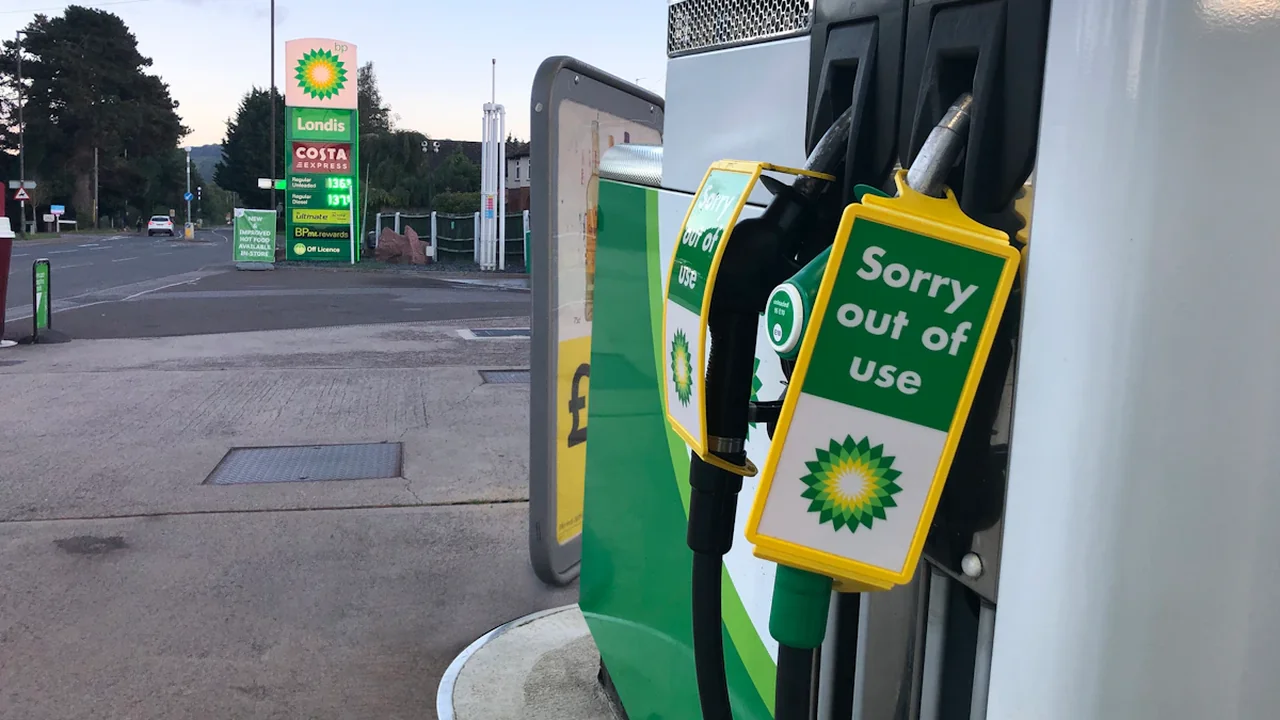
A 50-litre fill changes by 50p for every 1p per litre difference at the pump. That simple calculation helps UK drivers judge whether a nearby petrol or diesel price is meaningfully above or below the official weekly national average.
The Department for Energy Security and Net Zero publishes weekly UK average pump prices for petrol and diesel, with a reference date for each observation. However, the supplied official evidence does not contain the latest numerical observations or their reference date for 22 August 2026. No current value is estimated or substituted below.
Latest official petrol and diesel observation
The government’s weekly oil and petroleum products statistics are the appropriate place to obtain the latest UK figures. The actual petrol price, diesel price and observation date must be read together because the publication date may differ from the period represented.
| Petrol | Diesel |
|---|---|
| Latest official value not included in the supplied evidence | Latest official value not included in the supplied evidence |
| Reference date not included in the supplied evidence | Reference date not included in the supplied evidence |
Leaving those fields unfilled matters. Using an earlier number without its date could make a local forecourt appear cheaper or dearer than a benchmark that no longer reflects the same week.
RAC Fuel Watch also provides consumer-facing monitoring and commentary on UK petrol and diesel prices. It can add context, but comparisons with the official weekly average should retain the government observation’s exact date and units.
Why your local pump price can differ from the UK average
The national figure is a benchmark, not a price that every UK forecourt must charge. It combines observations from across the country, so motorists should expect individual sites to sit above or below it.

Several factors can explain the gap:
- Nearby competing forecourts may put downward pressure on local prices.
- Motorway service areas can charge more than sites reached from ordinary roads.
- Premium or higher-octane grades should not be compared with standard unleaded.
- Prices can change after the weekly observation date.
- Diesel and petrol have separate averages and should never be compared interchangeably.
A single local price above the national average does not, by itself, prove unfair pricing. Equally, a price below the benchmark does not guarantee the cheapest overall journey if reaching it requires a substantial detour.
What the difference means for a 50-litre fill
To calculate the cash effect, subtract the lower price from the higher price in pence per litre, then multiply by the number of litres. Divide by 100 to convert pence into pounds.
Illustrative example, not a current price claim: a forecourt charging 3p per litre less than the official benchmark would reduce the cost of a 50-litre fill by:
3p × 50 litres = 150p, or £1.50

The same method works when comparing two nearby stations. A 1p-per-litre saving is worth 50p over 50 litres; 2p is worth £1; and 5p is worth £2.50. Drivers buying less fuel should calculate against the amount they realistically expect to add, rather than the tank’s full capacity.
Check nearby prices without turning a saving into extra cost
Compare prices before setting off, using a trusted journey-planning or fuel-price service while parked. Never handle or study a phone while driving. A passenger can check safely, or the driver can pull over legally before changing the route.
Consider the whole journey rather than the pump number alone:
- Check that the listed price covers the correct fuel grade.
- Look at when the local price was last updated.
- Combine refuelling with shopping, work or another planned errand.
- Avoid a long diversion for a small per-litre saving.
- Include both the outward and return distance when assessing a detour.
For example, saving £1.50 on a 50-litre fill is not worthwhile if the additional drive consumes fuel costing more than £1.50. Time, traffic and safe access to the forecourt also belong in the decision.
The most useful next check is the newest government observation showing both pence-per-litre figures and its reference date. Compare that dated benchmark with prices for the same fuel grade near a journey already being made.
Source: Department for Energy Security and Net Zero
Context & actions About this article
Source check Data sources
The government dataset is the primary benchmark, but the supplied evidence did not include the latest prices or reference date, so no current figures were estimated.
- Confirm the newest petrol observation in pence per litre.
- Confirm the newest diesel observation in pence per litre.
- Record the reference date attached to both observations.
- Compare only equivalent fuel grades.
- Source
- Department for Energy Security and Net Zero
- Scope
- United Kingdom
- Updated
- 2026-08-22 12:41
Source check
Report a trust issue
Send a clear signal to community moderation if the source, facts or context need review.



Comments