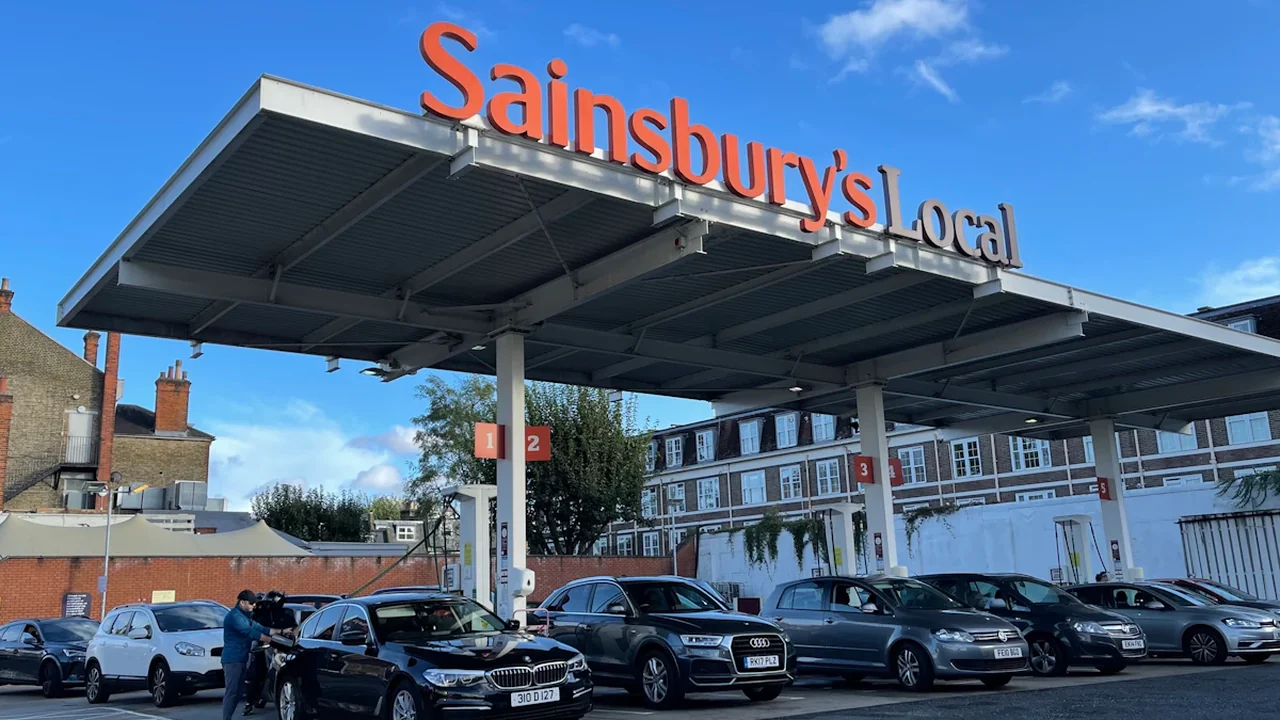
A lower petrol or diesel price does not automatically mean a cheaper journey. The real comparison must include the fuel used reaching the forecourt, the total distance driven and the value of any extra time. A station several miles away can erase a small pump-price saving before the planned journey begins.
All prices below are illustrative examples, not current UK averages or local quotes. Check live local data before setting off.
Calculate the fuel cost of the complete journey
For a vehicle measured in miles per imperial gallon, use this reusable calculation:
- Divide the total distance in miles by the vehicle’s miles per gallon figure.
- Multiply the result by 4.546 litres per imperial gallon.
- Multiply the litres required by the price per litre in pounds.
The complete formula is:
Fuel cost = (distance ÷ mpg) × 4.546 × price per litre
Use a realistic fuel-economy figure rather than relying automatically on the manufacturer’s laboratory result. Recent trip-computer data or calculations from previous fill-ups may better reflect traffic, weather, vehicle load and driving style.
For pump prices displayed in pence, divide the figure by 100 before multiplying. A displayed example price of 145p per litre becomes £1.45.
Worked example: nearby fuel versus a cheaper detour
Consider a driver planning a 200-mile journey in a car averaging 45mpg. A nearby forecourt charges an illustrative 145p per litre. Another station charges 139p, but visiting it adds a 12-mile round trip.
At the nearby station, the calculation is:
- 200 miles ÷ 45mpg = 4.44 imperial gallons
- 4.44 × 4.546 = approximately 20.20 litres
- 20.20 × £1.45 = approximately £29.30
Choosing the cheaper station increases the total distance to 212 miles:
- 212 miles ÷ 45mpg = 4.71 imperial gallons
- 4.71 × 4.546 = approximately 21.42 litres
- 21.42 × £1.39 = approximately £29.77
In this example, the advertised price is 6p per litre lower, yet the complete journey costs about 47p more. This comparison does not prove that distant stations are always poor value. A shorter detour, a larger purchase or a more efficient vehicle could change the result.
Measure the detour before chasing a lower price
A quick detour test compares the saving on the intended purchase with the cost of reaching the alternative station.
For example, a 6p-per-litre reduction saves £2.40 on a 40-litre purchase. A 12-mile detour in a 45mpg car consumes about 1.21 litres. At the illustrative cheaper price of £1.39 per litre, that extra fuel costs roughly £1.68, leaving a nominal saving of about 72p.
That remaining amount still excludes time, congestion, parking or route disruption. If the detour takes 20 minutes, the driver can decide whether 72p adequately compensates for it. No universal monetary value needs to be assigned to time; the relevant threshold depends on the household and the purpose of the trip.
A detour is more likely to make sense when:
- the station is already close to the planned route;
- the tank needs a substantial amount of fuel;
- the price difference is large enough to cover extra consumption;
- traffic conditions make the additional journey predictable.
Use live UK fuel data before travelling
UK Government guidance explains how road-fuel price data can be accessed and reused. This can support services that help drivers compare forecourts, but any displayed price should still be checked for its update time, fuel grade and exact location.
The Competition and Markets Authority is the UK’s competition regulator and publishes work concerning road-fuel markets. Its market-monitoring role provides broader scrutiny of competition and pricing, but it does not make an individual detour economical.
Before leaving, verify the live local price, calculate the actual additional mileage in both directions and check current traffic. If the available data is old or the saving is only a few pence overall, the nearby forecourt may remain the cheaper practical choice.
Source: UK Government
Context & actions About this article
Source check Calculation and sources
The journey-cost method uses imperial-gallon conversion, while official UK sources provide context on fuel-price data and market monitoring.
- Pump-price figures in the example are not current national prices.
- One imperial gallon is converted using 4.546 litres.
- Drivers should check live local prices and update times before travelling.
- Detour mileage must include the complete additional round trip.
- Source
- UK Government road-fuel price data guidance
- Scope
- United Kingdom
- Updated
- 2026-08-12 09:44
Source check
Report a trust issue
Send a clear signal to community moderation if the source, facts or context need review.




Comments