By the AtheneNet Culture Desk
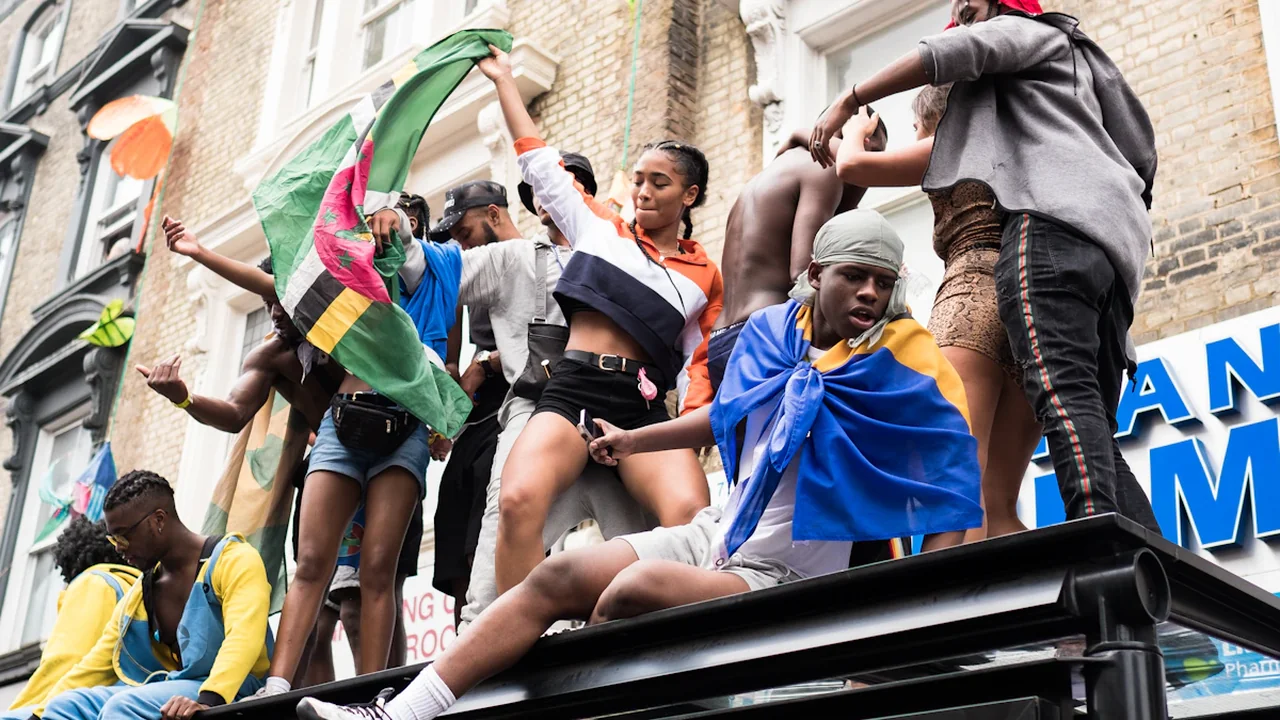
During the August Bank Holiday, Notting Hill Carnival transforms streets in west London through Caribbean masquerade, steel-pan music, calypso and sound systems. Behind that familiar public celebration lies a layered history of migration, resistance and neighbourhood organising—not the work of one founder or a single inaugural event.
The carnival developed through several connected initiatives. Claudia Jones organised indoor Caribbean carnival celebrations amid the racial hostility of late-1950s London. In the following decade, community activist Rhaune Laslett helped establish multicultural street events in Notting Hill. Caribbean musicians, performers and residents then shaped those gatherings into an annual celebration with its own evolving traditions.
Read also: Social Housing Bill’s final Lords stage in London on 1 September
Notting Hill Carnival grew from a changing post-war London
After the Second World War, Britain recruited workers from across the Commonwealth. Thousands of people arrived from the Caribbean, including passengers associated with the post-1948 Windrush generation, and established homes and communities across London.
Notting Hill was one important centre of this new Caribbean British life. Housing conditions could be poor, while discriminatory landlords, employers and businesses restricted opportunities for Black residents. Racist abuse and organised hostility also formed part of everyday life.
Tensions erupted into violence in 1958, when white crowds attacked Black residents in Notting Hill and nearby areas. The disturbances, often called the Notting Hill race riots, exposed racism that Caribbean communities had already been confronting through political organisation, journalism and mutual support.
Carnival emerged within this setting. Celebration was not separate from the struggle for dignity and public belonging: music, performance and gathering offered ways to assert a Caribbean presence in a city where Black residents were frequently treated as outsiders.
Claudia Jones created an indoor Caribbean carnival
Trinidad-born journalist and activist Claudia Jones was a major figure in Black British political and cultural life. She founded the West Indian Gazette, a newspaper serving Caribbean communities and addressing racism, colonialism and discrimination.
Following the violence of 1958, Jones helped organise a Caribbean carnival inside St Pancras Town Hall in January 1959. It brought together music, dance, cabaret and a carnival queen competition. Further indoor events followed at London venues.
Jones’s carnival drew upon Caribbean performance traditions while responding to the conditions experienced by Black Londoners. It created a visible cultural platform and demonstrated how celebration could also become an act of solidarity.
This event is an essential part of the history, but it was not the same occasion as the later street carnival in Notting Hill. Jones died in 1964, before the neighbourhood events of the later 1960s developed into an annual outdoor gathering.
Rhaune Laslett helped take neighbourhood festivities outdoors
Rhaune Laslett, a community organiser living in Notting Hill, was associated with the London Free School and efforts to bring together children and residents from the area’s different communities. During the 1960s, she organised local outdoor festivities that combined music, processions and street entertainment.
A 1966 street event is widely treated as a crucial stage in the development of the modern carnival. Caribbean participation gave the gathering a distinctive energy and direction. The appearance of steel-pan musicians connected the neighbourhood festival with forms of public procession already central to Caribbean carnival culture.
Laslett’s role matters, but describing her as the carnival’s sole founder would erase the broader community process. Jones’s earlier indoor celebrations, Laslett’s street initiatives and the work of Caribbean performers, organisers and residents belong to related but distinct parts of the story.
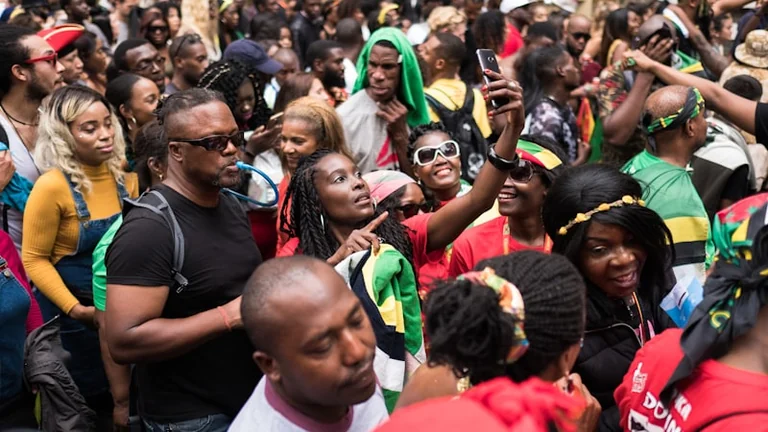
The modern Notting Hill Carnival grew as these strands met and changed. Its continuity depended on the people who returned each year, formed bands, built costumes, operated sound systems, organised routes and defended the event’s place in London.
Masquerade, steel bands and calypso shaped the celebration
Carnival traditions carried to Britain were themselves connected to different Caribbean islands and histories. Trinidad and Tobago provided especially influential forms, including costumed masquerade—often known as mas—steel-pan performance and calypso.
Masquerade is more than decorative dress. Carnival bands develop themes and use costume, movement and procession to tell stories or explore social and historical ideas. The visual spectacle seen in Notting Hill belongs to this tradition of organised, participatory performance.
Steel bands added a mobile musical presence. The steel pan developed in Trinidad and Tobago from experimentation with metal containers and became an important expression of Caribbean creativity. In a street procession, the instruments allow musicians and crowds to move together rather than separating performance from public space.
Calypso brought another tradition shaped by storytelling and commentary. Its lyrics can address politics, personalities and daily life through wit, satire and observation. Soca later contributed a faster, dance-oriented carnival soundtrack while retaining connections to Trinidadian musical culture.
Sound systems changed how the streets sounded
Sound-system culture became increasingly important as Notting Hill Carnival expanded, particularly from the 1970s. Rooted strongly in Jamaican practice, a sound system is not simply a set of loudspeakers. It includes selectors, DJs or MCs, specialist equipment and a community gathered around a particular musical identity.
These systems expanded the carnival beyond processional bands. Static music points created spaces where audiences could hear reggae, dub and other Caribbean genres at a scale rarely available in mainstream British venues or broadcasting.
Their arrival also reflected the diversity of London’s Caribbean population. Notting Hill Carnival developed through interaction among traditions rather than representing one island or one musical form. Mas bands, steel orchestras, calypso performers and sound systems continue to occupy different but complementary places within the event.
The carnival remains part of present-day Notting Hill
Notting Hill has changed substantially since the 1950s and 1960s. Rising property values and gentrification have altered who can afford to live in the area, yet the carnival continues to make Caribbean British history visible in its streets.
Its scale can sometimes obscure its origins. The event is now a major London gathering, but its cultural meaning rests on decades of community labour and on traditions preserved, adapted and passed between generations.
Readers planning to attend should use the official Notting Hill Carnival website for confirmed programme details, access guidance, route information and travel advice. Transport arrangements and street access can change for the Bank Holiday weekend, so current official information is more reliable than older guides or social posts.
Source: Notting Hill Carnival
Context & actions About this article
Source check Historical context
This account distinguishes Claudia Jones's indoor celebrations from Rhaune Laslett's later neighbourhood street events and the wider community development of the carnival.
- The official event site identifies the carnival as a Caribbean cultural celebration in Not...
- Historical accounts connect Claudia Jones with indoor Caribbean carnival events beginning...
- Rhaune Laslett is associated with Notting Hill street festivities during the 1960s.
- Current visitor arrangements should be checked on the official carnival website.
- Source
- Notting Hill Carnival
- Scope
- London
- Updated
- 2026-08-28 12:08
Source check
Report a trust issue
Send a clear signal to community moderation if the source, facts or context need review.

Comments