By AtheneNet Weather Desk | 29 August 2026
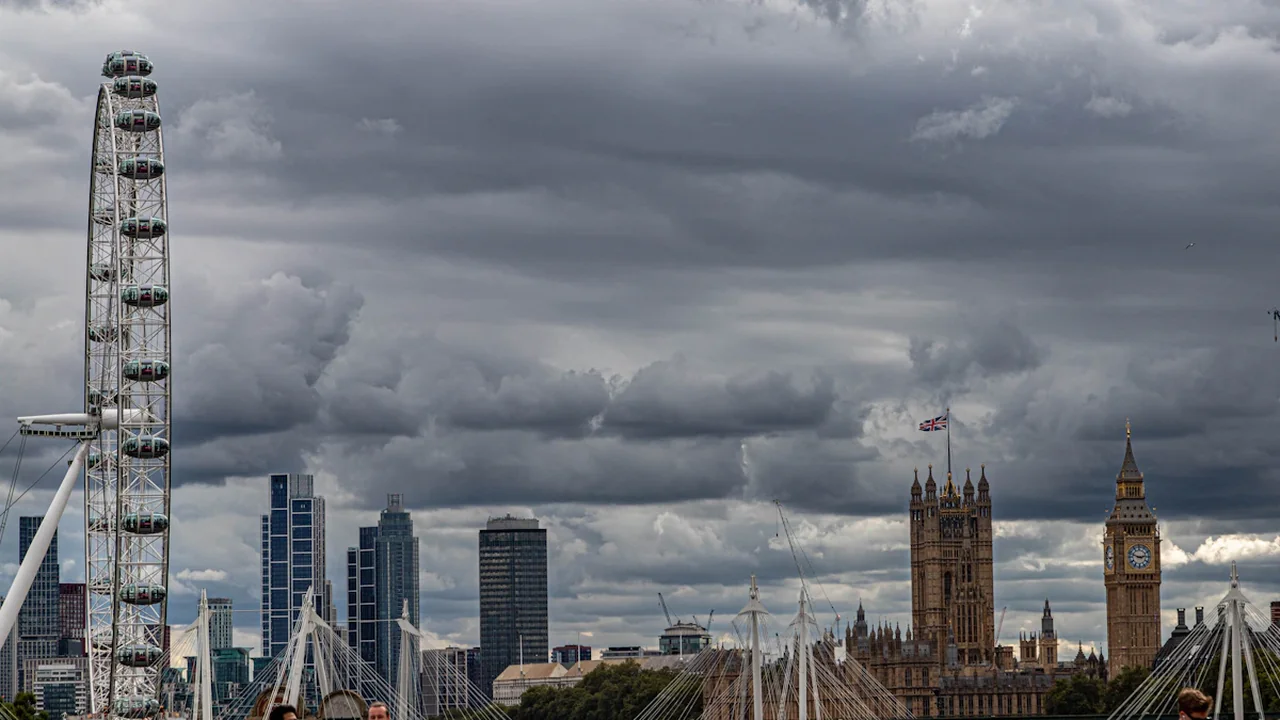
With September 2026 about to begin, the public forecast question is whether the Met Office will publish at least one amber or red weather warning covering UK land and valid during the month. The official warning service provides the colour, affected locations and validity period needed to decide the outcome by 30 September 2026. No particular result is assumed.
A qualifying warning could signal meaningful risks for travellers, homes and essential services. Depending on the hazard and location, possible consequences include rail cancellations, difficult driving, ferry or flight disruption, flooding and power interruptions. Warning colour reflects both expected impact and likelihood, however, so amber does not mean severe disruption is guaranteed everywhere covered.
The September test at a glance
- Question: Will a qualifying amber or red Met Office warning affect UK land during September?
- Deadline: The assessment closes at the end of 30 September 2026.
- YES: At least one qualifying warning is officially published.
- NO: No qualifying warning has appeared by the deadline.
- Deciding page: The Met Office UK weather warnings service.
Yellow warnings do not qualify, even when they describe conditions capable of disrupting journeys. The test concerns the official colour, geographic coverage and validity period—not reports of bad weather, individual forecasts or disruption observed without a qualifying warning.
What would make an amber or red warning count
The event resolves YES when the Met Office officially publishes an amber or red warning that covers any UK land area and is valid for any time from 1 through 30 September 2026. Nationwide coverage is unnecessary: a warning affecting one qualifying land area is enough.
The validity period matters more than whether the warning covers a full day. A warning overlapping September for only part of its active period still qualifies. For example, an amber warning beginning late on 31 August and remaining valid into 1 September would meet the date test if it covers UK land.
Publication is decisive. Once a qualifying warning appears on the official service, the result becomes YES even if the Met Office later changes its timing, reduces its area, lowers its colour or withdraws it. This prevents later revisions from rewriting what was publicly issued.
A red warning would also settle the question immediately, but it is not required. A single amber warning meeting the land and date conditions is sufficient.
Warning colours describe risk, not a guaranteed outcome
The Met Office warning colour combines the likelihood of the weather occurring with the level of impact expected. It should not be read as a simple measurement of wind speed, rainfall or certainty.

An amber warning therefore indicates a risk serious enough to justify heightened attention, but it does not promise that every road, railway or household inside the marked area will experience severe effects. Conditions and consequences can vary within a warning zone, while forecasts may change as the event approaches.
Red represents the highest warning level and warrants especially careful attention to official safety advice. Even then, readers should use the published hazard, area and timing rather than treating the colour alone as a detailed local forecast.
Yellow sits below the threshold for this specific forecast. That exclusion is a resolution rule, not a suggestion that yellow-warning conditions are harmless. Travellers should still review yellow warnings when planning journeys because localised disruption may occur without producing a YES result here.
Rail, road, ferry and flight risks to watch
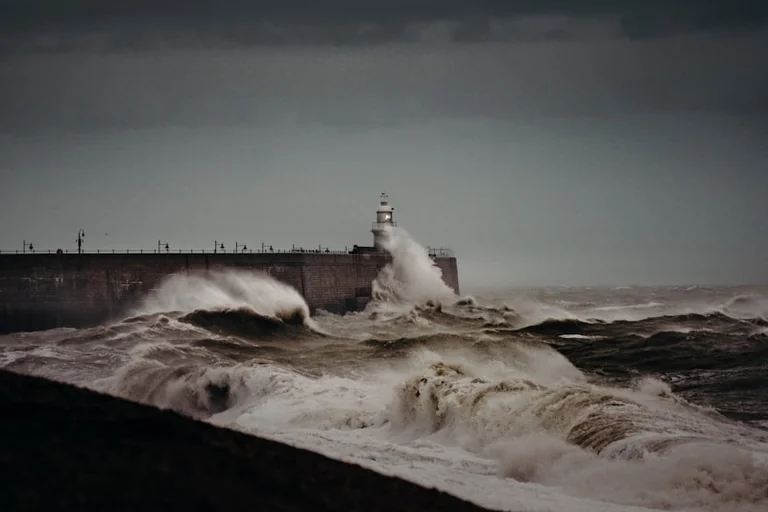
The practical effect of a warning depends on the hazard, its timing and the infrastructure exposed. Strong wind can create risks from debris and fallen trees, while extreme rainfall can reduce visibility, overwhelm drainage or cause flooding. Either can make travel slower and less predictable.
Rail and road journeys
Rail passengers may face delays, speed restrictions, altered services or cancellations where operators judge conditions unsafe. Roads can be affected by standing water, flooding, fallen branches, difficult crosswinds and congestion caused by closures or diversions.
Drivers should check conditions for the entire route rather than only the departure point. A journey can begin outside a warning area and enter one later, while bridges, exposed roads and low-lying sections may face different risks from nearby streets.
Ferries and flights
Ferry schedules may change when wind or sea conditions affect safe operations at ports or on crossings. Flights can also be delayed, diverted or cancelled when weather disrupts airports, aircraft movements or connecting transport.
An official warning does not automatically mean a particular service will be cancelled. Transport operators make operational decisions for their networks, which is why passengers need both the Met Office map and direct information from the company running the journey.
Flooding and power interruptions may extend beyond travel
Extreme rainfall can create risks for homes, businesses and public spaces as well as transport. Floodwater may block access routes, damage property or make familiar roads unsafe. People should follow local authority and emergency-service instructions and avoid assuming that a regularly used route remains passable.
Strong wind and flooding may also contribute to power interruptions or communications problems. Households in a warned area can reduce inconvenience by charging essential devices, keeping necessary contact details available and checking on people who may need additional help.
Any preparation should remain proportionate to the published warning. The relevant details are the named hazard, colour, location and validity period. Readers should not infer a national emergency from a warning covering a limited area, nor dismiss a focused warning because most of the country is unaffected.
The paths to YES and NO remain open
The YES path is straightforward: the Met Office publishes at least one amber or red warning that covers UK land and overlaps the September date window. The result is fixed at the moment of publication, regardless of later amendments or withdrawal.
The NO path remains possible until the deadline. If the official service publishes no qualifying amber or red warning by the end of 30 September, the forecast resolves NO. A month containing only yellow warnings, ordinary forecasts or disruptive weather without a qualifying warning would still produce that result.
This is intentionally narrower than asking whether September will be stormy, wet or disruptive. It measures one observable official action under defined conditions. It does not predict a specific storm, location, transport failure or level of damage.
Checks to make before travelling
People planning journeys during September should use live information because warning areas, validity periods and transport plans can change.
- Open the Met Office warning map and inspect the colour, hazard, area and active times.
- Check rail, road, ferry or airline information directly before departure.
- Review local authority advice where flooding, closures or community disruption are possible.
- Allow extra time and consider an alternative route or later journey when advised.
- Recheck shortly before leaving, especially for connections crossing several regions.
The next decisive development is an official amber or red warning that meets all three tests: qualifying colour, UK land coverage and a validity period overlapping September. Until then, the outcome remains unsettled, while the live warning map and operator notices provide the most useful guidance for individual journeys.
Source: Met Office
Context & actions About this article
Source check How the forecast is decided
The outcome depends exclusively on qualifying warnings published through the official Met Office UK warning service.
- Confirm that the warning colour is amber or red.
- Confirm that the warning covers at least one UK land area.
- Confirm that its validity period overlaps 1–30 September 2026.
- Record the first qualifying publication even if it is later changed or withdrawn.
- Source
- Met Office UK weather warnings
- Scope
- United Kingdom
- Updated
- 2026-08-29 13:33
Source check
Report a trust issue
Send a clear signal to community moderation if the source, facts or context need review.


Comments