
British passport holders taking short trips to the Schengen area may face additional border processing under the European Union’s Entry/Exit System. Initial registration can involve a facial image and fingerprints where required, so travellers should check their exact route and allow extra time rather than assuming every crossing operates identically.
By AtheneNet Travel Desk — 16 August 2026
What the Entry/Exit System records
The European Union’s EES guidance describes the Entry/Exit System as an automated system for registering non-EU nationals travelling for a short stay.
It is designed to record entries, exits and refused entries using information from the traveller’s travel document alongside biometric data. For a British passport holder, initial registration may include:
- Passport or other required travel-document details
- A facial image
- Fingerprints where the applicable procedure requires them
- The entry, exit or refused-entry record
Travellers should follow the instructions given at the border. The equipment, sequence of checks and use of staffed or automated lanes may not be identical at every location.
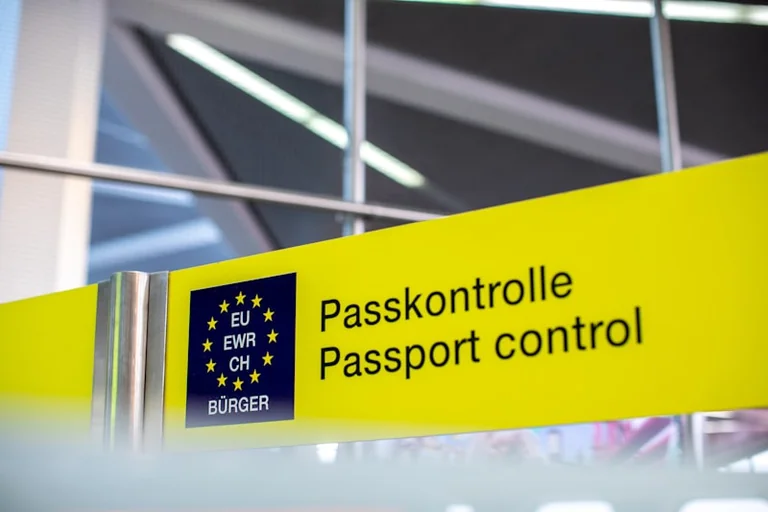
Why border-processing time can vary by route
Queues may differ between airports, ferry ports, international rail terminals and road crossings. Passenger numbers, staffing, available equipment, lane arrangements and the number of people completing initial registration can all affect processing.
The mode of travel matters too. Checks for air passengers moving through an arrivals hall may be organised differently from those for people travelling in vehicles or through a rail terminal. A previous experience on another route is therefore not a reliable guide to the time needed for the next journey.
Families and groups should keep every traveller’s documents accessible. They should also follow carrier and border instructions for children rather than assuming that all ages complete the same biometric steps.
Four checks to make before leaving the UK
- Verify the route’s current EES status. Consult the official EU information, GOV.UK guidance for British citizens and the carrier’s latest instructions for the specific airport, port or terminal.
- Confirm passport validity. Check the destination’s passport rules for the intended arrival and departure dates, including any issue-date or remaining-validity conditions.
- Build in additional border time. Follow the carrier’s recommended check-in or arrival time and leave a reasonable buffer for unfamiliar procedures.
- Prepare documents before the checkpoint. Keep the passport and booking information available and follow signs, staff directions and instructions shown on border equipment.
Check the exact crossing again before departure
Implementation arrangements can change and may differ between participating countries and individual border points. Shortly before travelling, review the official pages and any message from the airline, ferry company, rail operator or coach provider. Those route-specific instructions are more useful than a general estimate of how long EES checks might take.
Source: European Union
Context & actions About this article
Source check Official travel guidance
This guide uses European Union and UK government information, while recognising that border arrangements can vary by route and location.
- Check the current EES implementation status for the specific crossing.
- Confirm passport requirements for the destination and travel dates.
- Compare official guidance with the carrier’s latest instructions.
- Allow additional time without relying on a guaranteed queue estimate.
- Source
- European Union Entry/Exit System
- Scope
- United Kingdom and Schengen area
- Updated
- 2026-08-16 11:06
Source check
Report a trust issue
Send a clear signal to community moderation if the source, facts or context need review.



Comments