
By AtheneNet Travel Desk | Updated 18 August 2026
UK travellers entering the Schengen Area for a short stay may face additional registration steps under the European Union’s Entry/Exit System. People within scope should be prepared for passport and biometric checks, allow time for border formalities and follow instructions issued by their airline, ferry company or Eurotunnel operator.
EES applies at Schengen external borders rather than to every journey in Europe. The experience can vary substantially depending on whether checks take place at an airport, a ferry terminal or a juxtaposed border facility in the UK.
First EES registration can mean an extra border step
The European Union’s EES guide describes the Entry/Exit System as an electronic record of eligible non-EU travellers’ entries and exits. It uses travel-document information and biometric data and replaces routine manual passport stamping for people covered by the system.
On a traveller’s first crossing after EES applies to them, the process may include:
- Scanning the passport or other accepted travel document.
- Taking a facial image and, where required, fingerprints.
- Checking the information with a border officer or at designated equipment.
- Answering the usual border questions when requested.
The exact sequence depends on the border facility. Self-service equipment may collect information before a border officer completes the check, but using a kiosk does not itself guarantee admission. Border authorities retain responsibility for the final decision.
Later journeys may use the stored EES record to verify identity and register another entry or exit. Travellers can still be referred for additional checks, particularly if information cannot be matched or their circumstances require individual assessment.
Airports, ferry ports and Eurotunnel use different layouts
At an airport, EES formalities will normally be linked to passport control at the first Schengen external border reached. A traveller connecting onward inside the Schengen Area may therefore encounter the main check before the domestic Schengen leg of the journey.
Ferry terminals have different practical constraints. Passport checks may be organised around vehicles, lanes and groups of passengers. Drivers and passengers should remain together, have their documents accessible and leave a vehicle only when instructed by staff.
At juxtaposed controls, Schengen entry checks can take place in the UK before departure. This arrangement affects routes such as Eurotunnel services from Folkestone and some cross-Channel port journeys. The available space, vehicle flow and registration equipment differ from those at an airport arrivals hall.
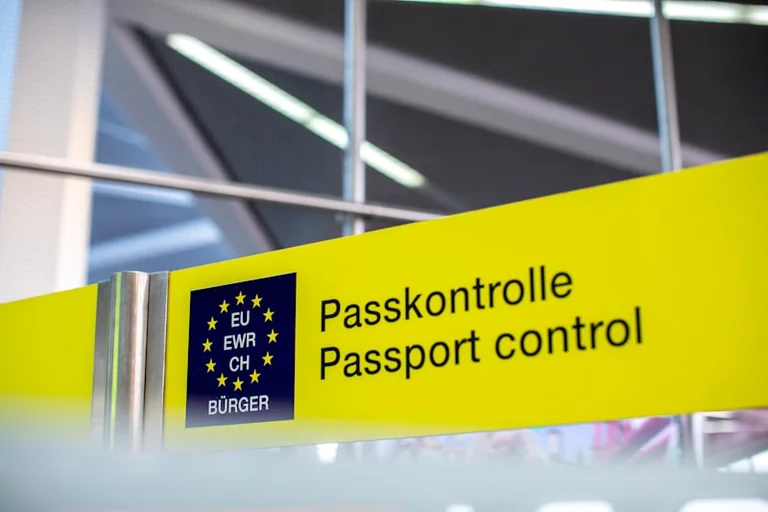
There is no reliable universal queue estimate. Passenger volumes, staffing, the number of first-time registrations and the design of each terminal can all affect processing. The most useful instruction is the one supplied for the specific route and departure.
EES does not replace ETIAS or the 90-day limit
EES and ETIAS are separate systems. EES records border movements and identity information. ETIAS is a distinct travel-authorisation scheme for eligible visa-exempt visitors when its requirements apply.
Completing an EES registration does not provide an ETIAS authorisation, and obtaining an ETIAS authorisation does not remove EES border checks. Travellers should check the official status and requirements of each system for their departure date.
EES also does not change the 90-days-in-180 rule for short visits to the Schengen Area. Days spent across participating countries are generally counted together. The electronic entry and exit record replaces routine stamping for travellers within scope, but it does not grant extra days or reset the permitted period.
Some travellers need status-specific guidance
Not every British citizen or non-EU passport holder will be handled in the same way. Residents, holders of certain residence documents, dual nationals and people travelling under Withdrawal Agreement rights may have different requirements or exemptions.
Those travellers should not assume that advice written for an ordinary UK short-stay visitor applies to them. They should consult the EU eligibility information and GOV.UK EES guidance, then carry the passport and residence or status documents relevant to their circumstances.
Documents and instructions to check before departure
Before travelling, passengers should:
- Confirm where border checks occur on their chosen route.
- Read the latest instructions from the airline, ferry operator or Eurotunnel.
- Check that their passport meets the destination’s validity rules.
- Carry any residence, Withdrawal Agreement or dual-nationality documents they rely on.
- Keep booking, accommodation and onward or return travel information accessible if requested.
- Review their previous Schengen travel against the 90-days-in-180 limit.
Official guidance and carrier messages remain the best final checks because procedures can differ by terminal and by a traveller’s legal status.
Source: European Union
Context & actions About this article
Source check Official guidance used
This guide draws on official European Union and UK government explanations of EES scope and border procedures.
- The EES purpose and recorded information were checked against the European Union guide.
- Advice for British short-stay visitors was checked against GOV.UK guidance.
- ETIAS and the Schengen 90-days-in-180 rule were treated as separate requirements.
- Source
- European Union Entry/Exit System guide
- Scope
- United Kingdom and Schengen Area
- Updated
- 2026-08-18 16:18
Source check
Report a trust issue
Send a clear signal to community moderation if the source, facts or context need review.


Comments