
By AtheneNet
Dreaming that you miss a train can leave you with a sharp sense of urgency, even after you wake. The image may feel familiar if you are facing deadlines, a change in direction or a fear of letting someone down. Its meaning depends on your own associations: a missed train is neither a prediction of a lost opportunity nor a diagnosis of anxiety.
Why a departing train can feel so urgent
Trains run to timetables and leave whether or not a passenger is ready. That makes them a useful image for moments when time seems to be moving faster than you can. In a dream, the pressure might centre on the departure itself, the journey you expected to take or the people waiting at the other end.
Consider what you were trying to do. Were you packing, searching for a ticket, finding the right platform or helping somebody else board? Each detail changes the question the dream might raise. Searching for a platform could echo uncertainty about a choice, while trying to gather everyone together might bring responsibility for others to mind.
The dream may also draw on ordinary experience. A recent commute, a travel plan or a conversation about being late can give the sleeping mind ready material. You do not need to find a hidden message in every detail for the dream to be worth reflecting on.
Deadlines, transitions and other possible connections
A missed train can resemble a deadline that feels difficult to meet. Work, study, family plans and appointments all come with schedules, but the pressure around them is personal. One person may worry about the task itself; another may worry about disappointing the person who expects them to arrive.
The journey can also suggest a transition. Starting a job, leaving a relationship or making a decision about where to live may create the feeling that a particular route is opening or closing. If the dream occurs during such a period, ask whether you feel ready for the change. Avoid treating the train as proof that you have already made the wrong choice.
For some dreamers, the strongest feeling is loss of control. The doors close, the train moves and there is no way to slow it down. That feeling may connect with a situation in waking life where other people set the pace. For others, missing the train brings relief: perhaps the imagined journey was one they did not want to take.
These are possibilities, not fixed meanings. Two people can dream about the same station and wake with entirely different concerns. Even your own interpretation may change when your circumstances change.
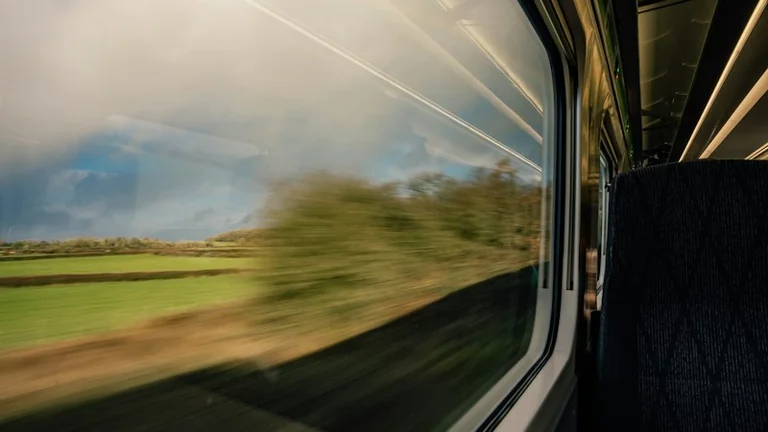
The train means something different to each dreamer
Dream symbols are shaped by personal history and cultural context. A train may stand for a daily commute, a long-awaited trip, separation from home or simply a scene from a film. Someone who rarely uses trains may connect the image with stories about departures; someone who relies on one every morning may connect it with the practical stress of getting to work.
That is why a dream dictionary entry such as “missing a train means missed opportunity” can feel compelling yet leave out the most useful information. It cannot know whether the station in your dream felt familiar, whether you wanted to board or whether another person was asking you to hurry.
Pay attention to the emotion alongside the image. Panic, embarrassment, frustration and relief point toward different questions. The feeling does not reveal a secret truth, but it can help you identify what currently deserves your attention.
A five-minute way to journal about the dream
Write down the dream soon after waking, using brief notes if that is all you remember. Then work through these prompts without trying to force a single interpretation:
- Name the strongest emotion. What did you feel when you realised the train was leaving? Did that feeling change after you missed it?
- Describe the setting. Was the station familiar? Were you alone? What, if anything, stopped you from reaching the train?
- Connect it to the present. Is there a deadline, decision, journey or expectation in your life that brings up a similar feeling?
- Look for another reading. If missing the train brought relief, what might you want more time to consider? If you felt ashamed, whose expectations were on your mind?
- Choose one useful next step. You might check a deadline, talk with someone about an obligation or give yourself more time to make a decision.
You can leave the last question unanswered. The exercise is a way to notice patterns in your feelings and circumstances, not a test with a correct solution.
When the feeling matters more than the symbol
A single unsettling dream does not tell you what will happen next. If missed-train dreams recur, comparing your notes over time may show whether the setting changes with your daily pressures. You might notice that the dream appears before a particular kind of commitment, or that it fades when a decision is settled.
If the dreams regularly disturb your sleep or leave you distressed during the day, the practical concern is how you are feeling and sleeping, regardless of what the train represents. Consider discussing that distress with a qualified health professional. Otherwise, the simplest place to begin is with the question the dream leaves you asking about your waking life: where do you feel hurried, and whose timetable are you trying to follow?
Source: Editorial research
Context & actions About this article
Source check About dream interpretation
Dream imagery has no fixed meaning; this article offers questions for reflection, not a diagnosis or prediction.
- Scope
- International
- Updated
- 2026-09-24 10:16
Source check
Report a trust issue
Send a clear signal to community moderation if the source, facts or context need review.




Comments