By AtheneNet editors
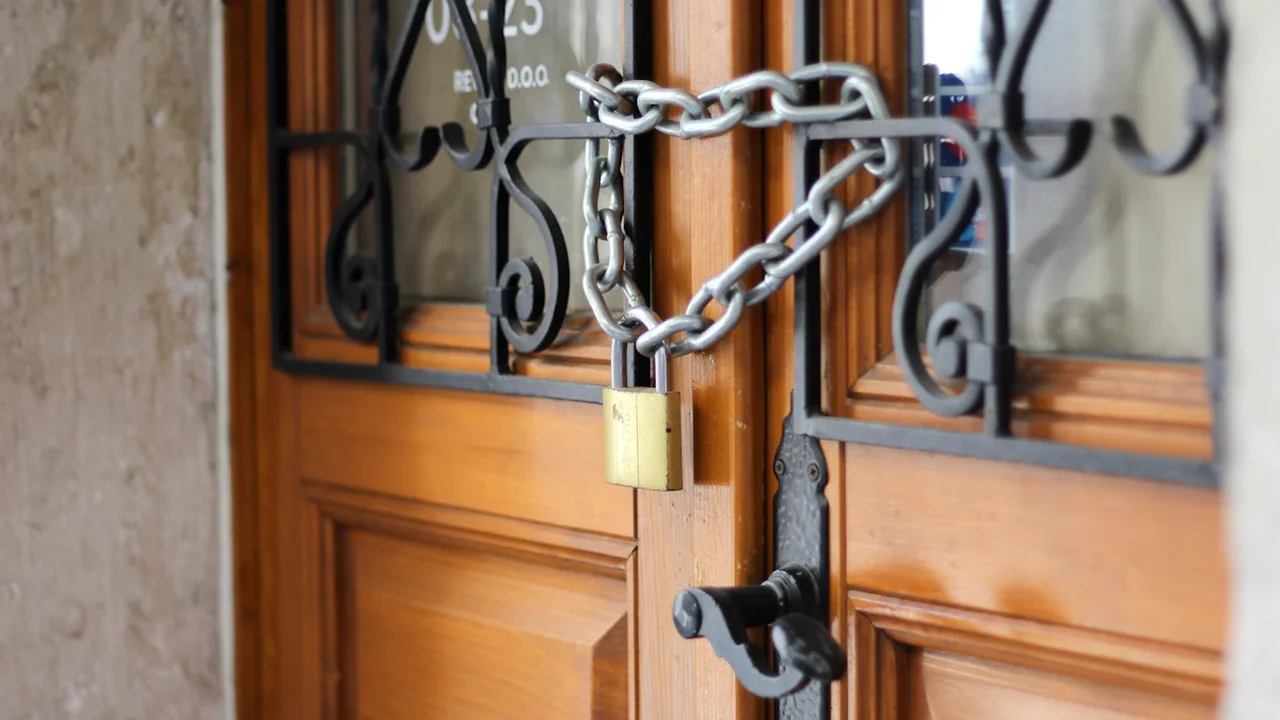
A locked door in a dream can feel like a simple obstacle, but its role may be more revealing than the lock itself. Did it keep you away from something you wanted, protect something you valued, or delay a journey already under way? Those differences offer a useful starting point for reflecting on boundaries and current plans. They do not give the dream a fixed meaning.
What was the locked door doing in the dream?
Start with what happened immediately before you reached the door. Were you trying to enter a room, leave a building or move along a route? The same locked door can play a different part in each scene. A door that blocks an entrance may draw attention to an opportunity you cannot yet reach. A door that keeps you inside may raise a different question about freedom or obligation.
Notice, too, whether the barrier felt hostile, reassuring or merely inconvenient. If you were relieved that the door stayed shut, it may be worth considering what you wanted to keep at a distance. If you felt frustrated, ask whether a current plan has an obstacle that resembles the dream in feeling, even if it looks nothing like a door in daily life.
The details matter because a dream is an experience, not a symbol pulled from a dictionary. Who had the key? Could you see through a window? Did anyone tell you why the door was locked? Your answers may point toward a more specific reflection than the phrase “locked door dream meaning” can provide on its own.
A door that protects something
A lock is sometimes there for a reason. In a dream, a closed door might stand between you and a place you wanted to keep private, or between someone else and something you felt responsible for. Consider whether you were trying to secure the door, checking that it was locked or trusting it to hold.
This version of the scene invites questions about boundaries. Where do you currently need privacy, rest or control over your time? Is there a commitment you want to protect from interruption? A boundary can be useful even when it disappoints someone else. The dream does not prove that a particular boundary is right; it may simply make your feelings about it easier to notice.
If the protected space belonged to someone else, the question changes. You might reflect on whether you are respecting another person’s limits or wishing you had more access than they can offer. Pay attention to the relationship and the emotion in the dream before drawing a connection to waking life.
A door that prevents entry
When you are on the outside trying to get in, the door can bring a blocked goal into focus. Perhaps you had a destination in mind, knew what was behind it or felt you were expected to enter. Those details can help distinguish disappointment from uncertainty. Was entry important to you, or did the locked door matter because someone else seemed to expect you to pass through?
A useful next step is to name one real plan that currently feels stalled. Write down what is actually preventing progress: a decision you have not made, information you lack, another person’s availability or a condition beyond your control. This keeps the reflection tied to your circumstances instead of treating the dream as a prediction.

Also consider your response in the scene. Did you search for a key, ask for help, wait, force the lock or walk away? None of these actions has a universal interpretation. They can, however, prompt a practical question: does your waking approach to the obstacle still suit the goal?
A locked door that delays a journey
Some dreams are less about what lies behind a door than about time. You may have been travelling, trying to leave or worried about arriving late when the locked door appeared. In that setting, the interruption may feel more significant than the destination itself.
Ask what made the delay urgent. Was there a deadline, a person waiting or a fear that the chance would disappear? If you have a current plan with several steps, identify which step depends on access you do not yet have. You may be able to prepare for the next stage while you wait, adjust the schedule or decide whether the route still makes sense.
A delay in a dream does not forecast a delay in real life. It can be a prompt to look at how you respond when progress is uncertain. The distinction matters: reflection can help you plan, while treating the dream as a warning may add pressure without giving you useful information.
Why door imagery feels familiar
Doors have long served as story images for thresholds: the point between one place and another, or between a familiar situation and an unknown one. A locked door adds a condition to that crossing. Someone may need permission, a key, more time or a different route. That familiar storytelling role helps explain why a doorway can stand out in a dream without making its meaning the same for everyone.
Your own associations deserve more weight than a general symbol list. A door like one from your childhood home may carry a different feeling from an unfamiliar door in a public building. The person beside you, the place you hoped to reach and what happened after you found it locked can all change the questions worth asking.
Questions to take back to your current plans
If the dream stayed with you, make a brief note of the scene while you remember it. Describe the door, your intended destination and your first reaction. Then use these questions to connect the image to your life without forcing an answer:
- What, if anything, did the locked door protect?
- Whose boundary did I encounter, and how did I feel about it?
- Which current plan feels blocked or delayed, and what is the real obstacle?
- Did I want to cross the threshold, or did I feel obliged to?
- What would be a reasonable next step if the obstacle remains?
For example, “I could not open the door and felt rushed” is a more useful note than “the door means failure.” It preserves what you experienced and leaves room to ask whether a deadline, a difficult decision or something else made the dream feel urgent. The next check is your waking situation: see whether the feeling matches a specific plan or boundary before giving the image a meaning.
Source: Editorial research
Context & actions About this article
Source check About dream meanings
Dream imagery has no fixed meaning; the questions in this article are prompts for reflection, not predictions.
- Recall what the door prevented or protected.
- Compare the feeling in the dream with a specific waking situation.
- Scope
- International
- Updated
- 2026-09-30 11:56
Source check
Report a trust issue
Send a clear signal to community moderation if the source, facts or context need review.



Comments