
By the AtheneNet Food Desk | Published 25 August 2026
These golden apple and sage sausage rolls can be baked ahead for the late-August bank holiday weekend. The recipe makes 12 portable rolls from one sheet of ready-rolled puff pastry, with a 20-minute chill helping them hold their shape before baking.
Prepare them the day before your picnic, cool them completely and refrigerate promptly. For transport, pack the cold rolls in a sealed container inside an insulated bag with frozen gel packs rather than putting warm pastries straight into a picnic basket.
Apple and sage sausage roll recipe card
- Yield: 12 sausage rolls, serving about 6 people
- Preparation: 20 minutes
- Chilling: 20 minutes
- Baking: 25–30 minutes
- Total time: About 1 hour 10 minutes
- Oven: 200°C, 180°C fan or gas mark 6
- Equipment: Baking tray, baking paper, mixing bowl, grater, sharp knife and pastry brush
Ingredients for 12 sausage rolls
- 500g sausage meat
- 1 medium crisp dessert apple, about 150g before peeling
- 2 teaspoons finely chopped fresh sage, or 1 teaspoon dried sage
- 25g fine breadcrumbs
- ¼ teaspoon freshly ground black pepper
- 1 sheet ready-rolled puff pastry, about 320g
- 1 egg, beaten, for glazing
- 1 teaspoon sesame or nigella seeds, optional
Sausage meat is normally already seasoned, so additional salt may not be necessary. Check the packaging before adding any. Keep the meat refrigerated until the filling is ready to assemble, and never taste the raw mixture.
Prepare a filling that will not make the pastry soggy
Peel and core the apple, then grate it coarsely. Gather the grated apple in clean kitchen paper or a clean tea towel and squeeze gently over the sink. Removing excess juice helps the pastry bake into distinct, crisp layers.
Put the sausage meat, apple, sage, breadcrumbs and black pepper in a bowl. Mix just until evenly combined; prolonged mixing can make the cooked filling unnecessarily dense. Divide it into two equal portions and shape each portion into a log roughly as long as the pastry sheet.
Wash your hands, utensils and work surface thoroughly after handling raw sausage meat. Keep raw-meat equipment away from cooked food and anything that will be eaten without further cooking.
Assemble the rolls and chill before baking
Unroll the puff pastry while it is still cold, keeping its backing paper underneath if that makes it easier to handle. Cut the sheet lengthways to form two long strips.
Place one sausage log down the centre of each strip. Brush one long pastry edge lightly with beaten egg, then bring the opposite edge over the filling. Roll so the glazed edge overlaps and seals underneath. Press the seam gently without crushing the pastry layers.
Cut each long roll into six equal pieces. Arrange them seam-side down on a baking tray lined with baking paper, leaving space for the pastry to expand. Make two shallow cuts across each top; avoid cutting through to the filling.
Refrigerate the tray for 20 minutes. This firms the fat in the pastry and helps the rolls retain a neat shape. Meanwhile, heat the oven to 200°C, 180°C fan or gas mark 6.
Egg-wash alternatives for different diets
Brush the chilled rolls lightly with beaten egg for a glossy, deeply coloured finish. Do not let a heavy coating collect around the base, where it can hinder the pastry’s rise.
For an egg-free glaze, use unsweetened plant milk or a very thin coating of neutral oil. Ordinary milk is another option when dairy is suitable. These alternatives can encourage browning, but they will not necessarily produce the same shine, colour or texture as beaten egg. Confirm that the pastry and filling also meet the relevant dietary requirements.
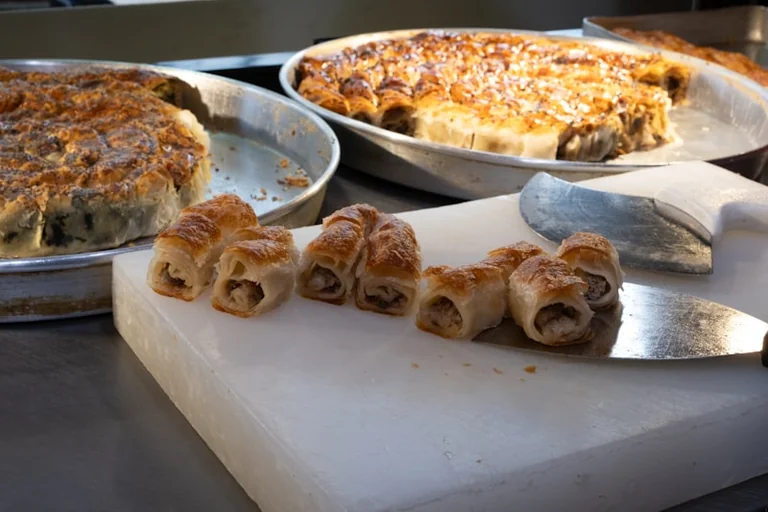
Scatter sesame or nigella seeds over the wet glaze if using. Seeds are optional and should be omitted when they present an allergy concern.
Bake until both meat and pastry are thoroughly cooked
Bake on the middle shelf for 25–30 minutes, turning the tray after about 20 minutes if the oven browns unevenly. The pastry should be well risen and deep golden rather than merely pale at the edges.
The most reliable check for the meat filling is a clean food thermometer inserted into the centre of one of the thickest rolls. It should reach 75°C. Test through the end or underside to avoid unnecessarily breaking the pastry top.
Without a thermometer, cut open one of the largest rolls. The centre should be steaming hot, firm and opaque, with no soft or translucent raw-meat texture. Colour alone is an imperfect safety test because sausage seasoning can affect its appearance.
Check the pastry separately. Its sides should show expanded, dry layers, while the underside should be crisp and golden. There should be no wet, gummy band beside the filling. If the tops colour before the centres are ready, cover them loosely with foil and continue baking, checking the filling again before removal.
Cool completely before packing the picnic
Transfer the baked rolls to a wire rack so air can circulate underneath. Allow the steam to escape, then refrigerate them promptly once they have cooled sufficiently; aim to have them chilled within two hours of leaving the oven. Do not close warm rolls inside a container, as trapped condensation softens the pastry and slows cooling.
For the picnic, place completely cold sausage rolls in a clean, sealed box. Carry the box in an insulated cool bag with frozen gel packs, keep it out of direct sun and return unused portions to the chilled bag quickly. Avoid leaving perishable food warm for an extended period, particularly on a hot day; when safe chilling has been lost for an uncertain length of time, discarding the food is the cautious option.
These rolls can be eaten cold. If reheating at home, heat them until the centre is piping hot throughout, then serve promptly rather than repeatedly cooling and reheating them.
A simple bank holiday make-ahead plan
For a Monday picnic, assemble the rolls on Sunday, cover the tray and refrigerate it away from ready-to-eat foods. Bake directly from the refrigerator within a day, allowing a little extra time if required and checking the centre reaches 75°C.
Alternatively, bake on Sunday, cool completely and store in a covered container in the refrigerator overnight. Packing them cold on Monday morning protects the pastry better than transporting them while still warm and makes temperature control easier.
Allergen checks and a vegetarian adaptation
Ready-rolled puff pastry and breadcrumbs usually contain wheat and gluten. Pastry may also contain milk, while sausage meat can contain wheat, sulphites, mustard or other allergens depending on its seasoning. Egg is present when the standard glaze is used. Read every label, including those on seeds and plant-based alternatives, and consider cross-contact in the kitchen.
For a vegetarian version, choose a chilled plant-based sausage filling or vegetarian sausages specifically labelled as suitable for oven cooking. Remove casings if necessary and combine cautiously with the squeezed apple and sage. Plant-based products vary in moisture, binding, seasoning and required cooking time, so the original quantities and timing may not behave identically. Follow the product’s cooking instructions and confirm the centre is fully cooked before serving.
Source: Editorial research
Context & actions About this article
Source check Recipe method
AtheneNet provides quantities, timing, cooking cues and transport precautions while recognising that ovens and packaged ingredients vary.
- Check every packaged ingredient for allergens and cooking directions.
- Chill the assembled rolls for 20 minutes before baking.
- Confirm the thickest filling reaches 75°C.
- Cool completely and transport the rolls with frozen gel packs.
- Scope
- United Kingdom
- Updated
- 2026-08-25 19:55
Source check
Report a trust issue
Send a clear signal to community moderation if the source, facts or context need review.


Comments