By the AtheneNet History Desk
Published 29 August 2026 | Historical event: 29 August 1842
On 29 August 1842, representatives of Qing China and the United Kingdom signed the Treaty of Nanjing aboard a British warship near the Chinese city. The agreement ended the First Opium War, opened five Chinese ports to British trade and ceded Hong Kong Island to Britain. These changes followed military defeat and coercion, not negotiations between equal powers.
At a glance
- The treaty ended the First Opium War after a British military victory.
- Guangzhou, Xiamen, Fuzhou, Ningbo and Shanghai became treaty ports.
- Qing China ceded Hong Kong Island and agreed to a large indemnity.
- Later conventions expanded British control before the 1997 sovereignty transfer.
The treaty was signed under the pressure of British warships
The treaty was concluded aboard HMS Cornwallis, anchored on the Yangtze near Nanjing. British forces had advanced along the coast and into the river system, capturing strategically important positions and threatening the city.
That setting matters. Although the document established commercial rules, it was not simply a trade agreement reached after routine diplomacy. Qing officials negotiated while facing a technologically superior expeditionary force that had demonstrated its ability to bombard ports, defeat coastal defences and disrupt major transport routes.
Encyclopaedia Britannica identifies the agreement as the settlement that ended the First Opium War and transferred Hong Kong Island to Britain. Its terms changed where British merchants could operate and reduced Qing control over foreign commerce.
The opium trade drove a wider conflict over commerce and sovereignty
Britain bought substantial quantities of Chinese tea, silk and porcelain during the eighteenth and early nineteenth centuries. Because China had limited demand for British products, British purchases initially produced a significant outflow of silver.
British merchants increasingly addressed that imbalance by selling opium grown in British-controlled India. The drug was prohibited in China, but smuggling networks brought it into the country in growing quantities. Opium sales generated revenue for merchants while contributing to addiction, corruption and a damaging reversal in China’s flow of silver.
From confiscated opium to open war
In 1839, the Qing government sent the official Lin Zexu to Guangzhou to suppress the trade. He compelled foreign merchants to surrender more than 20,000 chests of opium, which were destroyed at Humen. Britain treated the confiscation as an injury to its merchants and property interests.
The dispute also involved diplomatic status, legal jurisdiction and the Qing system that restricted Western commerce at Guangzhou. Yet opium was not a peripheral issue: it was central to the commercial confrontation that preceded the war.
The National Army Museum’s account places the fighting within this combined military, commercial and imperial setting. British naval mobility and modern weaponry allowed its forces to strike along China’s coast and waterways between 1839 and 1842.
Five treaty ports and Hong Kong were among the principal terms
The Treaty of Nanjing imposed several major obligations on Qing China:
- Five ports—Guangzhou, Xiamen, Fuzhou, Ningbo and Shanghai—were opened to British residence and trade.
- Hong Kong Island was ceded to Britain in perpetuity.
- China agreed to pay an indemnity of 21 million silver dollars.
- The licensed merchant system known as the Cohong monopoly at Guangzhou was abolished.
- British and Qing officials were to communicate on a more formally equal basis.
- Customs duties at the opened ports were to be governed by an agreed tariff.
Opening treaty ports did not mean that all of China became freely accessible to British traders. It created designated coastal centres in which foreign merchants, consuls and commercial communities could establish a lasting presence under treaty arrangements.
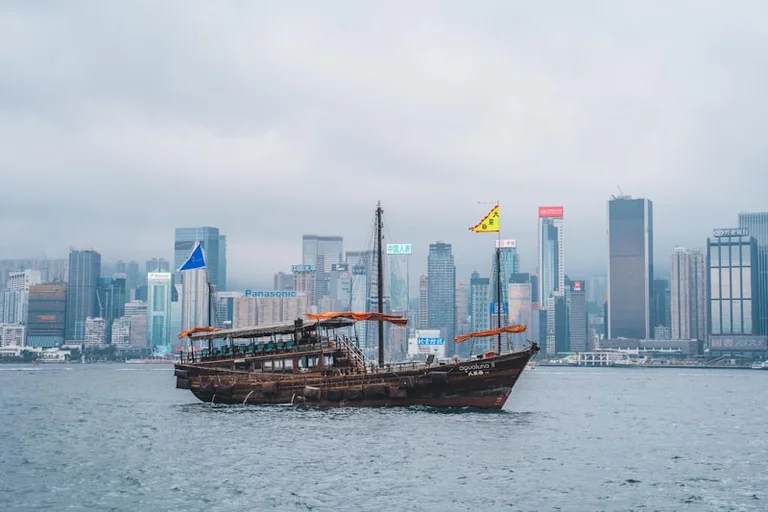
Some privileges often associated with the settlement were formalised later. The supplementary Treaty of the Bogue in 1843 provided Britain with benefits including most-favoured-nation treatment and consular jurisdiction over British subjects. Distinguishing these agreements prevents later provisions from being incorrectly attributed to the 1842 text alone.
Why it is called the first unequal treaty
The Treaty of Nanjing is commonly described as the first of China’s “unequal treaties.” The expression refers to agreements imposed on Qing China and other states by foreign powers using military or diplomatic pressure, with obligations and privileges that were not meaningfully reciprocal.
The label reflects the circumstances and structure of the settlement. Britain gained territory, commercial access and financial compensation after defeating China. Qing authorities did not receive comparable rights in Britain, while their ability to regulate foreign trade was restricted.
Other Western powers later obtained similar or broader concessions. Further defeats produced additional ports, foreign legal privileges and territorial changes. Japan also imposed agreements on China later in the nineteenth century. The Treaty of Nanjing therefore became both a specific peace settlement and the beginning of a wider treaty system that constrained Chinese sovereignty.
Nanjing and Nanking refer to the same treaty and city
Modern English usually calls the agreement the Treaty of Nanjing, following the pinyin romanisation of the city’s Chinese name. Older English histories generally use Treaty of Nanking, reflecting an earlier spelling convention.
The two titles do not identify different documents. They are alternative English renderings of the same place name. Historical institutions, book titles and archival catalogues may retain “Nanking,” while contemporary reference works increasingly prefer “Nanjing.” Searching both spellings can therefore reveal different parts of the historical record.
Later agreements expanded British control in Hong Kong
The 1842 cession applied specifically to Hong Kong Island. Britain’s eventual control of the larger territory known as Hong Kong emerged through later agreements:
- 1842: The Treaty of Nanjing ceded Hong Kong Island to Britain.
- 1860: The Convention of Peking ceded the southern part of the Kowloon Peninsula and Stonecutters Island.
- 1898: A second convention leased the New Territories and additional land north of Kowloon to Britain for 99 years.
- 1984: Britain and China signed the Sino-British Joint Declaration concerning Hong Kong’s future.
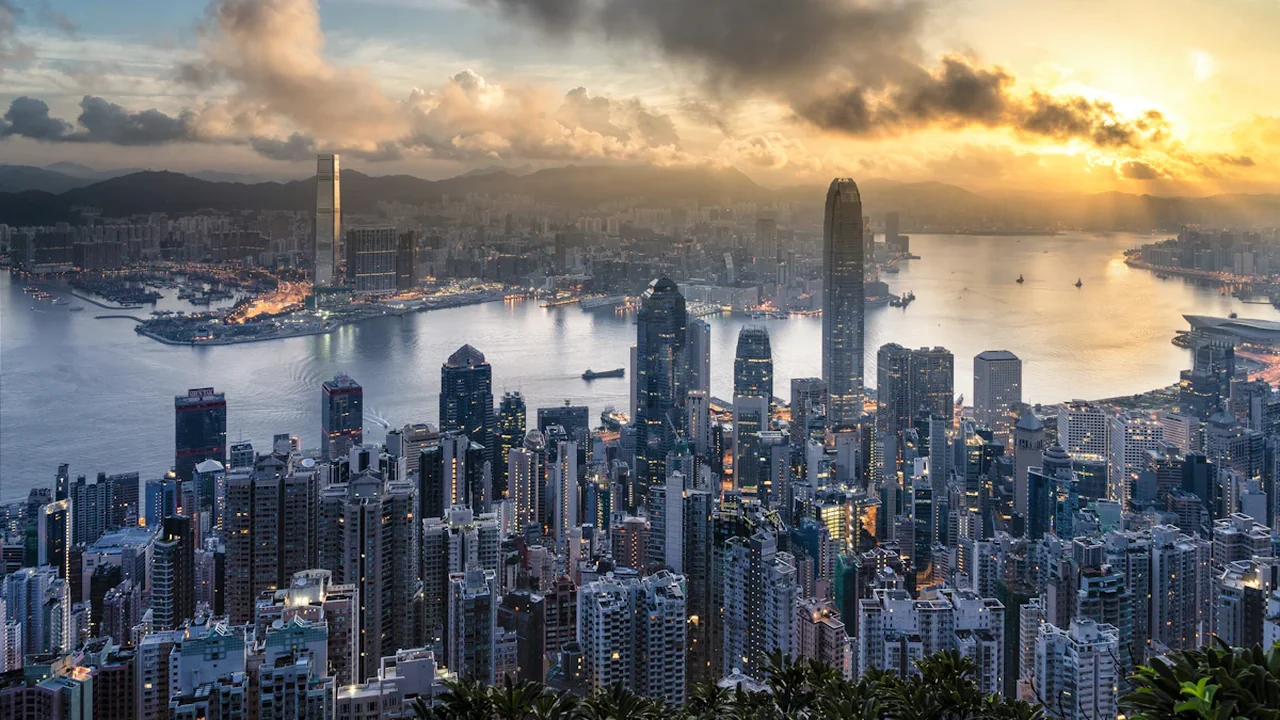
- 1 July 1997: Sovereignty over Hong Kong was transferred to the People’s Republic of China.
The legal histories of these areas were therefore different: Hong Kong Island and part of Kowloon were ceded, while the New Territories were leased. Britain ultimately transferred the territory as a whole in 1997.
Britain, China and Hong Kong differently
In Britain, older accounts often framed the treaty through naval victory, expanded commerce and the growth of empire. More recent historical presentations give greater attention to the illegal opium trade, the imbalance of military power and the coercive character of the settlement.
In China, the treaty is widely remembered as the beginning of the unequal-treaty era and a major breach of territorial sovereignty. It is frequently placed near the start of the period described as the century of humiliation, when foreign states extracted concessions from a weakened Qing government.
Hong Kong’s historical memory is more layered. The treaty marked the beginning of British colonial rule on Hong Kong Island, but experiences of that rule varied across generations and communities. Migration, war, economic transformation, colonial inequality and the development of distinct local institutions all shaped how the period has been interpreted.
The significance of 29 August 1842 lies in this combination of war, commerce and territorial power. The treaty ended one conflict, but it also established an imperial relationship whose consequences continued through later conventions and the eventual transfer of sovereignty in 1997.
Source: Encyclopaedia Britannica
Context & actions About this article
Source check Historical source context
The account distinguishes the 1842 treaty from later agreements while placing its commercial terms within the First Opium War’s coercive imperial setting.
- Checked the signing date and principal treaty terms against Encyclopaedia Britannica.
- Used the National Army Museum for the war’s military, commercial and imperial context.
- Separated the Treaty of Nanjing from privileges formalised by the 1843 Treaty of the Bogue...
- Distinguished territorial cessions from the 99-year New Territories lease.
- Source
- Encyclopaedia Britannica: Treaty of Nanjing
- Scope
- China and the United Kingdom
- Updated
- 2026-08-29 08:35
Source check
Report a trust issue
Send a clear signal to community moderation if the source, facts or context need review.




Comments