By the AtheneNet Economy Desk | 18 August 2026
The Office for National Statistics has placed the July 2026 consumer-price inflation release on its official calendar, bringing a closely defined question to its decision point: will the UK CPI 12-month rate be lower than it was in June? Households, savers and wage earners are affected by the direction of inflation, while the forecast deadline matters because it closes on 18 August 2026, before the figure is published.
No inflation percentage is assumed in this preview. The outcome will depend entirely on the first July rate published by the ONS and its comparison with the corresponding June rate shown at the same precision.
The July CPI test at a glance
- The question is whether July’s UK CPI 12-month rate will be strictly lower than June’s rate.
- The forecast closes on 18 August 2026, against the latest official page.
- YES requires the displayed July rate to be lower than the displayed June rate.
- NO applies if July is equal to or higher than June.
- The initial scheduled ONS release settles the result; later revisions will not change it.
The relevant publication will appear through the ONS consumer-price inflation bulletin. Its release calendar provides the scheduled entry for inflation data covering July 2026.
Why this is a strict month-to-month comparison
The Consumer Prices Index measures changes in the prices of a broad basket of goods and services bought by households. Its 12-month rate compares the index for one month with the index for the same month a year earlier.
This forecast does not ask whether inflation feels high, whether individual bills have increased or whether the July index moved down from June in absolute terms. It asks only whether the official July 12-month rate is strictly below the corresponding June rate.
Precision matters. If the ONS displays the two rates to one decimal place, the comparison will use those displayed figures. An unrounded calculation that is not presented as the headline rate cannot turn an apparent tie into a YES result.
The distinction also prevents a common misunderstanding. A lower inflation rate usually means prices are rising more slowly than they were a year earlier. It does not, by itself, mean the overall price level has fallen or that earlier increases have been reversed.
What could produce a YES or NO result
A YES result has one route: the first ONS-published July CPI 12-month rate must be lower than the corresponding June rate. That could happen if the combination of July price movements and the prices dropping out of the annual comparison reduces the headline rate.
Annual inflation can change even when the latest monthly movement is modest. Each new reading replaces the comparable month from the previous year, creating what economists often call a base effect. The result can therefore reflect both current price changes and the historical comparison point.

A NO result covers two distinct outcomes. It applies if the July rate is higher than June, but it also applies if the two displayed rates are equal. Stability may sound different from an increase in ordinary conversation, yet neither outcome satisfies the market’s requirement for a strictly lower figure.
There is no verified consensus estimate included here, and the official schedule does not indicate the direction of the result. Until the bulletin appears, the timing is known but the comparison remains uncertain.
A lower rate would not mean household prices have fallen
The CPI headline can help describe the national direction of consumer-price growth, but it is not a household bill. Families buy different combinations of food, energy, transport, housing-related services and leisure products, so their personal experience can diverge from the published average.
Household budgets and purchasing power
If inflation eases while income remains unchanged, the pace at which purchasing power is being eroded may slow. That is different from restoring the purchasing power lost during earlier periods of rising prices.
For example, a supermarket item that became substantially more expensive in previous years can continue increasing in price even while the national inflation rate falls. The increase may simply be smaller than before. Conversely, selected products can become cheaper while the overall CPI rate remains positive.
Households should therefore read the July rate alongside the ONS breakdown of major categories. Contributions from essentials can matter more to day-to-day budgets than the headline movement alone, particularly for people who devote a large share of their income to food, energy or transport.
Wages, savings and real returns
Inflation is also used as a reference point for wage growth. If pay rises faster than consumer prices over a comparable period, real purchasing power may improve before taxes and changes in working hours are considered. If pay growth trails inflation, a nominal raise can still leave a worker able to buy less.
For savers, the relevant comparison is between the return on a savings product and inflation, with tax and account conditions also taken into account. A lower CPI rate can narrow the gap for some savers, but it does not automatically make every savings return positive in real terms.
The national CPI rate is consequently a useful benchmark rather than a personalised financial calculation. Individual circumstances, spending patterns and account terms still determine the practical effect.
The Bank of England will look beyond one headline figure
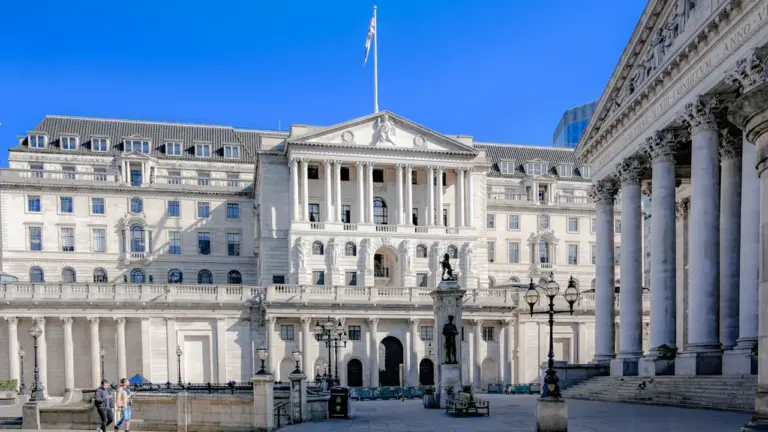
The July release can influence expectations about interest rates because inflation is central to the Bank of England’s monetary-policy decisions. A lower headline rate could support expectations that price pressure is easing, while an equal or higher reading could reinforce caution.
One CPI result does not determine the next interest-rate decision. Policymakers also examine services inflation, wage growth, labour-market conditions, economic activity and evidence about whether price pressures are becoming persistent.
The detailed composition of the release may therefore matter as much as the binary result. A fall driven by a narrow or temporary category can send a different economic signal from broadly weaker price growth. Similarly, an unchanged headline rate can contain offsetting movements beneath the surface.
Borrowers should not assume that a YES result guarantees an immediate reduction in mortgage or loan rates. Market pricing, lender funding costs, product competition and expectations for future Bank Rate decisions all influence the rates offered to customers.
How the official July result will be decided
Settlement will use the first CPI 12-month rate for July 2026 published in the initial scheduled ONS consumer-price inflation release. The corresponding June 2026 rate shown in that publication provides the comparison.
The decision sequence is straightforward:
- Read the July CPI 12-month rate displayed in the initial ONS bulletin.
- Identify the corresponding June rate used for the month-to-month comparison.
- Resolve YES only if the July figure is strictly lower at the displayed precision.
- Resolve NO if the July figure is equal to or higher than June.
Later corrections, methodological updates or revisions will not reopen the result. This keeps the forecast tied to the information available at the scheduled publication rather than allowing its meaning to change retrospectively.
The next check is the initial ONS inflation bulletin
After the 18 August close, the decisive information will be the headline CPI 12-month rate in the initial July 2026 bulletin. Readers should also examine the category contributions and the ONS explanation of the monthly change before drawing broader conclusions about household finances or interest rates.
The binary result will answer a narrow question about direction. The full release will answer the more useful follow-up: which prices drove the change, how widely the movement was distributed and whether July adds to evidence of easing inflation pressure.
Source: Office for National Statistics
Context & actions About this article
Source check How the forecast is settled
The result depends solely on whether the first ONS-published July CPI 12-month rate is strictly lower than June's displayed rate.
- Use the initial scheduled ONS consumer-price inflation bulletin.
- Compare the July and June CPI 12-month rates at the precision displayed by ONS.
- Resolve NO if the rates are equal or if July is higher.
- Do not reopen the result following later revisions.
- Source
- Office for National Statistics consumer-price inflation bulletin
- Scope
- United Kingdom
- Updated
- 2026-08-18 18:21
Source check
Report a trust issue
Send a clear signal to community moderation if the source, facts or context need review.


Comments